
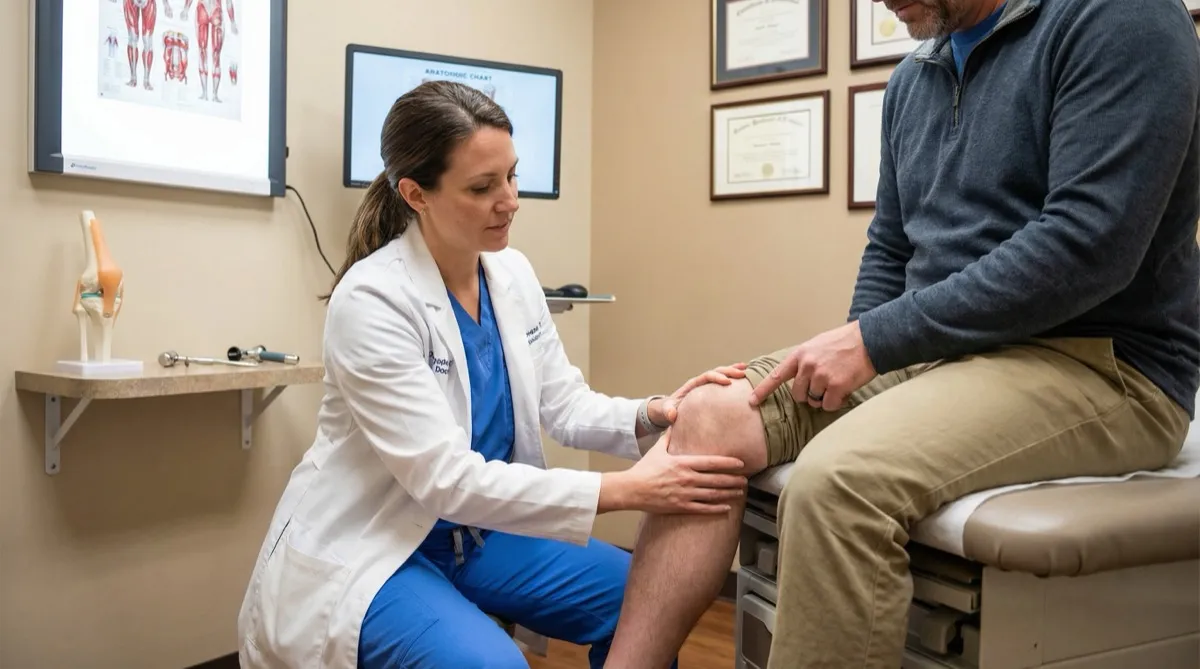
What Kind of Doctor Should I See for Knee Problems?
If you’re experiencing knee pain, choosing the right doctor can make all the difference in your recovery. While your knee might hurt, the path to effective treatment isn’t always clear. Should you start with your primary care physician? Do you need an orthopedic surgeon? What about a sports medicine doctor or rheumatologist?
The answer depends on several factors: the severity of your pain, how long you’ve had symptoms, whether you experienced a specific injury, and your overall health goals. This comprehensive guide will help you understand which knee doctor is right for your situation and when to seek specialized care.
Understanding Your Options: Types of Knee Doctors
When it comes to knee problems, several types of medical professionals can help. Each brings unique expertise and treatment approaches to managing knee pain and dysfunction.
Primary Care Physicians: Your First Stop
Your primary care provider is an excellent place to start for most knee concerns. Primary care physicians play a vital role in the initial assessment and management of knee pain, particularly for acute pain due to minor injuries or strains [1]. There are several advantages to beginning your journey here:
- Complete Medical History: Your PCP has a comprehensive picture of your medical history, including medications, your history of weight management, and background on your lifestyle and activities [2]
- Faster Access: Your primary care provider often has immediate availability, but you may have to wait longer to see a specialist [2]
- Cost-Effective: A visit to your PCP usually means a lower deductible for the initial diagnosis and baseline testing [2]
- Appropriate for Minor Issues: GPs are ideal for minor knee concerns such as a slight strain, sprain, or general knee discomfort that does not persist or worsen [2]
Your primary care doctor can evaluate your symptoms, order initial imaging if needed, prescribe anti-inflammatory medications, and refer you to a specialist when appropriate.
Orthopedic Surgeons: Structural and Surgical Experts
Orthopedic surgeons specialize in treating the musculoskeletal system—bones, joints, muscles, and their supporting structures and tissues [3]. Many orthopedic surgeons sub-specialize in specific areas of the body, such as the knee joint, which can be particularly helpful for conditions like severe knee arthritis [3].
When to see an orthopedic surgeon:
- Persistent pain lasting more than two weeks may indicate an underlying issue that needs professional evaluation [4]
- Severe swelling or bruising around the knee joint that does not improve could signify a serious injury like a ligament tear or fracture [4]
- Weight-bearing issues—struggling to put weight on your knee or walk without discomfort is a common sign of structural damage or joint problems [4]
- Limited mobility—if bending, straightening, or moving your knee feels restricted, it could point to cartilage damage, arthritis, or other joint issues [4]
Since orthopedic surgeons are qualified to perform surgeries, it’s best to see them for procedures like joint replacements and arthroscopy [5]. However, many orthopedic surgeons also provide non-surgical treatments and prefer conservative approaches before recommending surgery.
Sports Medicine Doctors: Injury Prevention and Rehabilitation
There are two main types of sports medicine physicians, and understanding the difference is important [6]:
Non-Orthopedic Sports Medicine Physicians: Some sports medicine physicians are not surgeons and can have a background in family medicine, internal medicine, or even emergency medicine. They tend to focus more on non-surgical treatments—possibly involving physical rehabilitation or drug therapy, or a combination of both [5].
Orthopedic Sports Medicine Surgeons: These doctors are orthopedic surgeons who have received specialized training in the diagnosis, treatment, and prevention of musculoskeletal injuries related to sports and physical activity, with expertise in both surgical and non-surgical care for bones, joints, ligaments, tendons, and muscles [5].
If your injury or pain occurred during a sports event or workout, a sports medicine doctor can pinpoint how the injury happened, treat it non-surgically, and give tips on future injury prevention [5].
Rheumatologists: Inflammatory and Autoimmune Specialists
While both rheumatologists and orthopedic doctors can treat knee osteoarthritis, they differ significantly in their approach. The main difference is that orthopedists are surgical specialists, whereas rheumatologists are medical specialists who use medication and other nonsurgical treatments [7].
Rheumatologists are experts in the treatment of inflammatory autoimmune disorders, such as lupus or rheumatoid arthritis, which involve the patient’s immune system attacking its own healthy body tissue [7]. If you have an autoimmune condition affecting your joints, or if your knee pain is accompanied by systemic symptoms like fatigue, fever, or multiple joint involvement, a rheumatologist may be the appropriate specialist.
Joint Pain Specialists: Focused Non-Surgical Treatment
Joint pain specialists focus specifically on non-surgical interventions for arthritis and degenerative joint conditions. These physicians specialize in advanced injection therapies and regenerative treatments that can provide significant relief without surgery.
At specialized clinics like Joint Relief Institute, board-certified physicians concentrate exclusively on treating knee osteoarthritis through viscosupplementation—hyaluronic acid gel injections that lubricate the joint and reduce pain. What sets specialized treatment centers apart is their use of fluoroscopy-guided injections, which ensure precise medication delivery.
Research confirms that fluoroscopy-guided injections improve outcomes significantly compared to traditional blind injections. Patients who received fluoroscopy-guided injections experienced significant pain relief and improved joint function, while non-guided injections missed the joint up to 30% of the time [8].
When to Start with Your Primary Care Doctor
For most knee problems, your primary care physician is the logical first step. Here’s when starting with your PCP makes the most sense:
- New or Mild Symptoms: If your knee pain is recent and not severe
- No Clear Injury: When pain develops gradually without a specific traumatic event
- First Episode: If this is your first experience with knee problems
- Uncertain Cause: When you’re not sure what’s causing your discomfort
Your primary care doctor will conduct a physical examination, review your medical history, and may order X-rays or other imaging to identify the problem. If necessary, they’ll provide a referral to the appropriate specialist based on their findings.
When to Go Directly to a Specialist
Some situations warrant bypassing your primary care doctor and going straight to a specialist:
Acute Severe Injuries
If you experience any of these red flags, seek immediate orthopedic evaluation:
- Hearing a popping noise during an injury, accompanied by immediate pain, could indicate a ligament tear or other acute damage [4]
- Inability to bear weight on your leg
- Obvious deformity or dislocation
- Severe swelling within the first few hours after injury
Chronic Degenerative Conditions
If you’ve been diagnosed with knee osteoarthritis and conservative treatments haven’t provided relief, a joint pain specialist who focuses on advanced injection therapies may be your best option. Viscosupplementation with hyaluronic acid has shown effectiveness for patients with mild to moderate arthritis who have not found relief from medications, activity modification, or physical therapy [9].
The EUROVISCO consensus guidelines from 2024 provide strong recommendations for the use of intra-articular hyaluronic acid knee injection according to patient characteristics, offering individualized treatment decision algorithms in the management of knee osteoarthritis [10].
Athletic or Sports-Related Injuries
For injuries sustained during athletic activities, a sports medicine physician can provide specialized care focused on:
- Rapid return to activity
- Sport-specific rehabilitation protocols
- Injury prevention strategies
- Performance optimization
The Role of Specialized Knee Treatment Centers
Specialized treatment centers like Joint Relief Institute fill a crucial gap in knee care—providing expert non-surgical treatment for patients who haven’t responded to basic conservative care but aren’t ready for or don’t need surgery.
What Makes Specialized Centers Different
Focused Expertise: By concentrating exclusively on joint pain treatment, these centers develop deep expertise in advanced injection techniques. With over 400,000 procedures performed, Joint Relief Institute has refined their approach to viscosupplementation to maximize patient outcomes.
Advanced Technology: Fluoroscopy-guided injections represent a significant advancement in precision medicine. By using live X-ray imaging, physicians can place medications precisely where needed—improving outcomes, lowering risks, and helping patients get back to activity faster [8]. Fluoroscopy is a useful tool to ensure joint injections are administered in the most precise and safe way possible—eliminating risks and possible negative results sometimes associated with joint injections [8].
Insurance Coverage: Most insurance plans cover hyaluronic acid injections for symptomatic knee osteoarthritis not responding to other treatments [9]. Medicare and most major insurance plans are accepted at specialized treatment centers, making this advanced care accessible to patients.
Who Benefits from Viscosupplementation?
Hyaluronic acid gel injections are particularly effective for:
- Patients with mild to moderate knee osteoarthritis
- Those who haven’t found adequate relief from oral medications
- Individuals seeking to delay or avoid surgery
- People with medical conditions that make surgery risky
- Active adults who want to maintain their lifestyle
The procedure is quick, office-based, and usually well-tolerated, with temporary soreness or swelling being the most common side effect [9]. Benefits typically appear 4 to 6 weeks after treatment and can last up to 6 months; injections can be repeated if pain returns [9].
Making Your Decision: A Step-by-Step Approach
Here’s a practical framework for choosing the right knee doctor:
Step 1: Assess Your Symptoms
Mild symptoms (occasional discomfort, no swelling, full mobility): → Start with your primary care physician
Moderate symptoms (frequent pain, some swelling, limited activities): → Primary care physician or direct referral to orthopedic/joint specialist
Severe symptoms (constant pain, significant swelling, inability to function): → Orthopedic surgeon or emergency care if acute injury
Step 2: Consider Duration
Less than 2 weeks: Primary care physician 2-6 weeks without improvement: Request specialist referral More than 6 weeks: Direct specialist consultation appropriate
Step 3: Evaluate Your Goals
Want to avoid surgery: Joint pain specialist or sports medicine physician Need surgical evaluation: Orthopedic surgeon Autoimmune concerns: Rheumatologist Athletic performance focus: Sports medicine doctor
Step 4: Check Insurance Requirements
Many insurance plans require a primary care referral before seeing a specialist. However, some plans allow direct access to specialists. Medicare patients often have more flexibility in choosing specialists without referrals.
Questions to Ask Your Knee Doctor
Regardless of which specialist you see, these questions will help you understand your condition and treatment options:
-
What is causing my knee pain? Get a clear diagnosis, not just symptom management.
-
What are all my treatment options? Ensure you understand both surgical and non-surgical alternatives.
-
What are the risks and benefits of each option? Make informed decisions based on complete information.
-
What is the expected timeline for improvement? Set realistic expectations for your recovery.
-
How many of these procedures have you performed? Experience matters, particularly for specialized treatments.
-
What happens if this treatment doesn’t work? Understand the next steps in your care plan.
-
Are there any lifestyle changes I should make? Address contributing factors like weight, activity level, or footwear.
The Joint Relief Institute Advantage
For patients in the Chicago area (Glenview, Oak Brook, Orland Park) or Minneapolis (Edina) dealing with knee osteoarthritis, Joint Relief Institute offers a specialized approach that combines cutting-edge technology with extensive experience.
Why patients choose Joint Relief Institute:
- Proven Results: With over 40,000 patients treated and 400,000+ procedures performed, JRI has one of the most extensive viscosupplementation experience bases in the country
- Advanced Precision: Fluoroscopy-guided injections ensure medication reaches the exact location for maximum effectiveness
- Non-Surgical Focus: Expertise in helping patients avoid or delay knee replacement surgery
- Exceptional Ratings: 4.9 Google rating reflects consistently high patient satisfaction
- Insurance Friendly: Medicare accepted, most insurance plans covered
Led by Dr. Michael Hana, Joint Relief Institute’s team focuses exclusively on non-surgical joint pain treatment, providing patients with a specialized alternative to surgery or long-term medication use.
Take the Next Step Toward Pain Relief
Don’t let knee pain limit your life. Whether you’re experiencing your first episode of knee discomfort or you’ve been struggling with chronic osteoarthritis, the right medical professional can help you find relief and restore function.
If you have knee osteoarthritis and want to explore advanced non-surgical treatment options, Joint Relief Institute can help. Our fluoroscopy-guided viscosupplementation approach has helped thousands of patients reduce pain and improve mobility without surgery.
Call (800) 238-9307 to schedule a consultation at one of our convenient locations. Our team will evaluate your condition, review your treatment history, and determine if advanced gel injections are right for you.
Frequently Asked Questions
What type of doctor is best for knee pain?
For most knee pain, start with your primary care physician for initial evaluation. If pain persists beyond two weeks, involves severe swelling, or significantly limits mobility, an orthopedic surgeon or joint pain specialist is appropriate. For knee osteoarthritis, specialists who focus on non-surgical treatments like viscosupplementation can provide effective alternatives to surgery.
Do I need a referral to see a knee specialist?
Many insurance plans require a referral from your primary care physician before seeing a specialist. However, Medicare patients often have more flexibility and can see specialists without referrals. Check your specific insurance plan requirements before scheduling an appointment.
What is the difference between an orthopedic surgeon and a joint specialist?
Orthopedic surgeons are trained in both surgical and non-surgical treatments for musculoskeletal conditions and can perform operations when necessary. Joint specialists focus specifically on non-surgical interventions such as advanced injection therapies, regenerative treatments, and conservative management of arthritis and degenerative conditions.
How do I know if I need surgery for my knee?
Surgery becomes necessary when conservative treatments have failed to provide adequate relief and your quality of life is significantly impacted. Before considering surgery, patients should typically try non-surgical options including physical therapy, medications, weight management, activity modification, and advanced injection therapies like viscosupplementation.
What is fluoroscopy-guided injection and why does it matter?
Fluoroscopy-guided injection uses live X-ray imaging to ensure precise placement of medication directly into the knee joint. Research shows that non-guided injections miss the joint up to 30% of the time, while fluoroscopy-guided injections provide significantly better pain relief and improved joint function by ensuring accurate medication delivery.
Does insurance cover viscosupplementation for knee arthritis?
Most insurance plans, including Medicare, cover hyaluronic acid injections for symptomatic knee osteoarthritis that hasn’t responded to other treatments. Insurance often requires that patients first try other conservative treatments like physical therapy before approving viscosupplementation, though requirements vary by plan.
How long does it take to see results from gel injections?
Benefits from hyaluronic acid gel injections typically appear 4 to 6 weeks after treatment and can last up to 6 months. Injections can be repeated if pain returns. The procedure is quick, office-based, and usually well-tolerated, with temporary soreness or swelling being the most common side effect.
Sources
-
Comprehensive Primary Care. “Do I Need to See a Specialist for My Knee?” https://comprehensiveprimarycare.com/do-i-need-to-see-a-specialist-for-my-knee/
-
Orthopaedic Associates of Maine. “Orthopedic Knee Doctors: When to See a Specialist.” https://www.orthoassociates.com/blog/orthopedic-knee-doctors-when-to-see-a-specialist-vs.a-general-practitioner
-
Cleveland Clinic. “Orthopedic Surgeon: Definition, Expertise & Specialties.” https://my.clevelandclinic.org/health/articles/orthopedic-surgeon-orthopedist
-
New York Bone & Joint Specialists. “When Should You Visit an Orthopedic Knee Specialist?” https://nyboneandjoint.com/when-should-you-visit-an-orthopedic-knee-specialist/
-
New York Bone & Joint Specialists. “Should You See an Orthopedic Doctor or a Sports Medicine Doctor?” https://nyboneandjoint.com/orthopedic-vs-sports-medicine-doctor/
-
Stevens Point Ortho. “Orthopedic Care vs. Sports Medicine.” https://stevenspointortho.com/orthopedic-care-vs-sports-medicine-differences/
-
Orthopedic Specialists of SW Florida. “What Is the Difference Between a Rheumatologist vs. an Orthopedist?” https://www.osswf.com/what-is-the-difference-between-a-rheumatologist-vs-an-orthopedist/
-
CFI Pain. “Fluoroscopy Guided Injections: How Precision Helps Pain.” https://cfipain.com/fluoroscopy-guided-injections-how-precision-helps-pain/
-
Johns Hopkins Medicine. “Viscosupplementation Treatment for Arthritis.” https://www.hopkinsmedicine.org/health/conditions-and-diseases/arthritis/viscosupplementation-treatment-for-arthritis
-
National Center for Biotechnology Information. “EUROVISCO Consensus Guidelines for the Use of Hyaluronic Acid Viscosupplementation in Knee Osteoarthritis Based on Patient Characteristics.” https://pmc.ncbi.nlm.nih.gov/articles/PMC11577334/


