How Long Do Gel Injections Last in Your Knees?
If you’re considering gel injections for knee pain, one of your first questions is likely: how long will the relief last? Most patients experience pain relief from knee gel injections lasting approximately six months on average, with some reporting benefits extending up to a year or more depending on individual factors and treatment protocols [1].
Knee gel injections, also called viscosupplementation or hyaluronic acid injections, supplement the natural lubricating fluid in your knee joint that diminishes with osteoarthritis. Understanding what affects how long these treatments work can help you maximize your results and make informed decisions about your knee pain management.
What Are Knee Gel Injections?
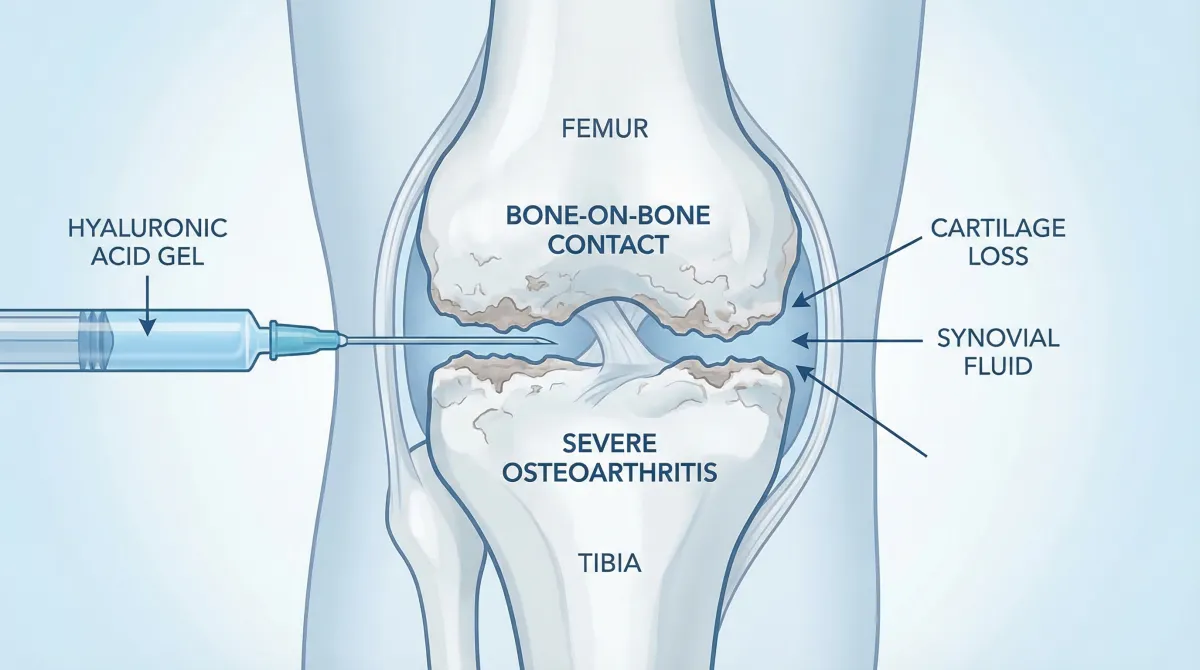
Knee gel injections involve injecting hyaluronic acid directly into your knee joint to restore cushioning and lubrication. Hyaluronic acid is a naturally occurring substance in healthy synovial fluid that acts as both a lubricant and shock absorber. When osteoarthritis damages your knee cartilage, the natural hyaluronic acid in your joint becomes diluted and less effective [2].
Viscosupplementation treatments aim to supplement this depleted lubricating fluid, reducing bone-on-bone friction and providing pain relief without the need for surgery. The procedure is minimally invasive and typically performed in an outpatient setting.
How Long Do Gel Shots Typically Last?
According to the Cleveland Clinic, once you begin to feel relief from hyaluronic acid injections, it can last for months, with most people able to go about six months before needing a new dose [1]. However, the duration varies significantly among individuals.
Timeline for Relief
Understanding the timeline helps set realistic expectations:
-
Initial Period (First 48 Hours): You may experience mild soreness, pressure, or swelling at the injection site that typically resolves within 1-2 days [3]
-
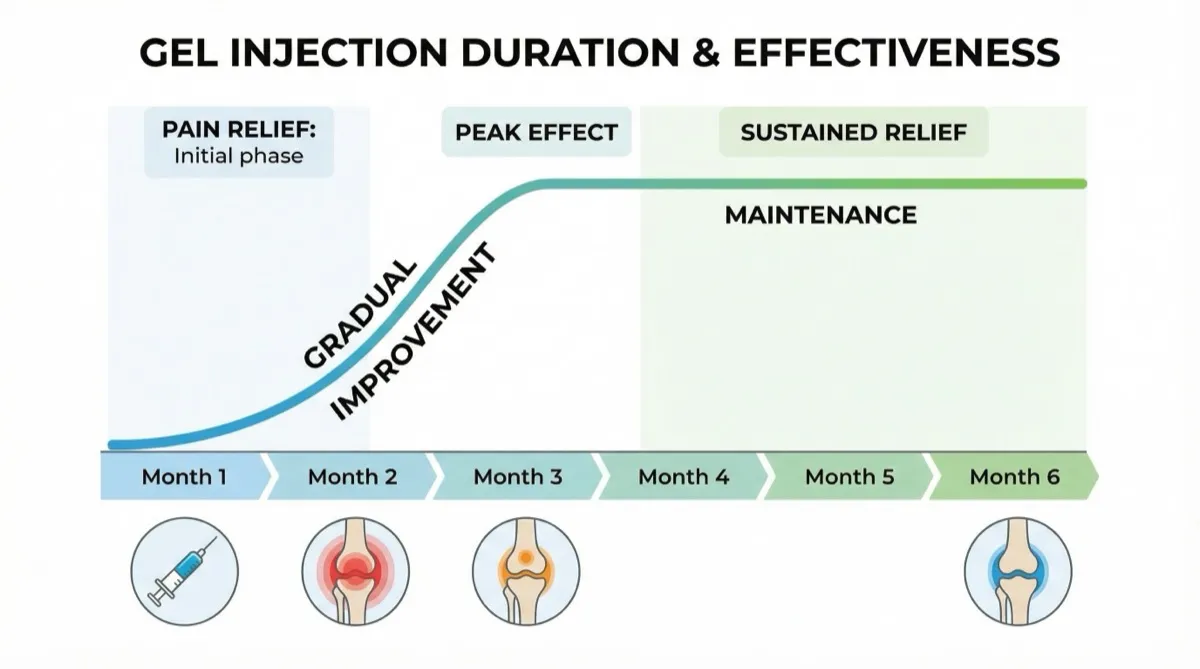
Early Relief (2-4 Weeks): Some patients, particularly those with mild to moderate osteoarthritis, begin noticing improvements within 2-4 weeks [3]
-
Peak Effectiveness (4-6 Weeks): Benefits typically appear at their strongest 4 to 6 weeks after treatment, as the full cushioning effect develops [4]
-
Duration of Relief (6-12 Months): Most patients experience pain relief lasting approximately six months, though relief can extend up to 12 months for many individuals [1][5]
Extended Duration Results
Research on specific formulations shows varying results. A 6-year observational study of 623 consecutive patients receiving Durolane injections found an average duration of pain relief lasting 466.8 days (approximately 15 months) following initial treatment [1].
It’s important to note that response rates vary. According to the American Academy of Orthopaedic Surgeons, some patients report pain-relieving effects for several months following injections, while others do not experience significant improvement [5].
Factors That Affect How Long Gel Injections Last
Multiple factors influence the longevity of your viscosupplementation treatment. Understanding these variables can help you optimize your outcomes.
Patient-Related Factors
Severity of Osteoarthritis: Patients with mild to moderate knee osteoarthritis often experience more pronounced and longer-lasting results compared to those with advanced disease [2][5]. As arthritis progresses, gel injections may become less effective and require more frequent administration.
Body Mass Index (BMI): Higher BMI, particularly over 27.5 kg/m², is associated with shorter periods of symptom relief [6]. Excess weight increases stress on knee joints, potentially accelerating the breakdown of injected hyaluronic acid.
Age and Activity Level: Younger patients with milder osteoarthritis tend to experience longer-lasting benefits. A sedentary lifestyle is linked to shorter symptom relief duration, while maintaining appropriate activity levels may help prolong effects [6].
Treatment-Related Factors
Type of Hyaluronic Acid: The specific formulation matters. High-molecular-weight hyaluronic acid products are sometimes associated with longer durations before subsequent treatments are needed [6]. Different brands (Synvisc, Orthovisc, Euflexxa, Durolane, Monovisc, and others) have varying molecular weights and cross-linking properties.
Treatment Protocol: Most patients receive a series of injections administered over several weeks—typically one shot every week for three to five weeks [1]. Single-injection formulations are also available but may have different duration profiles.
Number of Previous Treatments: Research suggests repeated injections beyond three sessions may reduce duration of efficacy, possibly due to progressive cartilage deterioration [6].
Lifestyle and Adjunctive Care Factors
Physical Therapy: Combining gel injections with physical therapy often yields better and more sustained results than injections alone [4][6]. Strengthening muscles around the knee joint helps support and protect the joint.
Weight Management: Maintaining a healthy weight and staying active may help prolong treatment effects [6]. First-line treatments for osteoarthritis typically include physical therapy and weight loss alongside injections [4].
Post-Injection Care: Avoiding strenuous activities for 48 hours after injection and following recommended physical therapy programs can enhance treatment benefits [4].
What to Expect During and After Treatment
The Treatment Process
The injection procedure is relatively quick and straightforward:
-
Preparation: Your healthcare provider cleans the injection site and may use a local anesthetic to minimize discomfort
-
Injection: Using ultrasound or fluoroscopy guidance for precision, your doctor injects the hyaluronic acid gel directly into the knee joint space
-
Post-Treatment: You’ll rest briefly before being discharged with aftercare instructions
Immediate Aftercare
For the first 48 hours after your injection:
- Rest your knee and avoid heavy use
- Apply ice if you experience swelling
- Avoid high-impact activities like running or jumping
- Take over-the-counter pain relievers if needed for minor discomfort
Building to Peak Relief
While some patients notice improvements within days, most experience gradual relief building over 4-6 weeks. During this period, continue with recommended physical therapy exercises and follow your healthcare provider’s activity guidelines.
When to Consider Repeat Treatments
If gel injections effectively relieved your knee pain, they can be repeated when symptoms return. According to research, repeat treatments are typically administered after approximately six months [5].
Safety of Repeated Injections
Unlike cortisone shots, which can damage cartilage with frequent use, gel injections are safe to receive repeatedly for as long as you need them. Frequent use won’t make them work less effectively or raise your risk of side effects [1].
Signs It’s Time for Another Treatment
Consider scheduling a follow-up appointment when:
- Pain and stiffness begin returning to pre-treatment levels
- You notice decreased mobility or range of motion
- Daily activities become more difficult again
- You’ve reached the 5-6 month mark since your last injection
Your orthopedic specialist can assess whether repeat injections are appropriate or if it’s time to explore additional treatment options.
Maximizing the Duration of Your Results
While individual factors play a significant role, you can take steps to extend the benefits of your gel injections:
1. Maintain a Healthy Weight
Reducing stress on your knee joints helps preserve both natural cartilage and injected hyaluronic acid. Even modest weight loss can significantly impact knee pain and treatment longevity.
2. Engage in Low-Impact Exercise
Regular low-impact activities like swimming, cycling, and walking keep joints mobile without excessive stress. Stronger muscles provide better knee support and protection.
3. Follow Your Physical Therapy Program
Consistent participation in prescribed physical therapy exercises strengthens supporting muscles, improves flexibility, and enhances joint stability—all factors that can prolong treatment benefits.
4. Use Proper Footwear and Orthotics
Supportive shoes and custom orthotics help distribute weight evenly and reduce stress on knee joints during daily activities.
5. Avoid High-Impact Activities
While staying active is important, avoid activities that place excessive stress on your knees, such as running on hard surfaces, jumping, or deep squatting with heavy weights.
6. Consider Complementary Treatments
Combining viscosupplementation with other conservative therapies—such as NSAIDs, topical analgesics, or bracing—may enhance overall effectiveness and duration [4].
Comparing Gel Injections to Other Treatments
Understanding how gel injection duration compares to alternatives helps inform treatment decisions:
Corticosteroid Injections: Provide fast-acting relief but typically wear off within 2-3 months [7]. While effective for acute flare-ups, they’re not recommended for frequent use due to potential cartilage damage.
Platelet-Rich Plasma (PRP): Recent studies show PRP can provide pain improvement of approximately 52% after one year, potentially offering longer-lasting relief than traditional gel injections [7]. However, PRP is often not covered by insurance and costs more.
Oral Medications: NSAIDs and acetaminophen provide symptom management but don’t address underlying joint mechanics. They require daily use and carry risks with long-term consumption.
Surgery: Joint replacement provides permanent solutions but involves significant recovery time, risks, and costs. Most doctors recommend exhausting conservative options like gel injections first.
When Gel Injections May Not Be Ideal
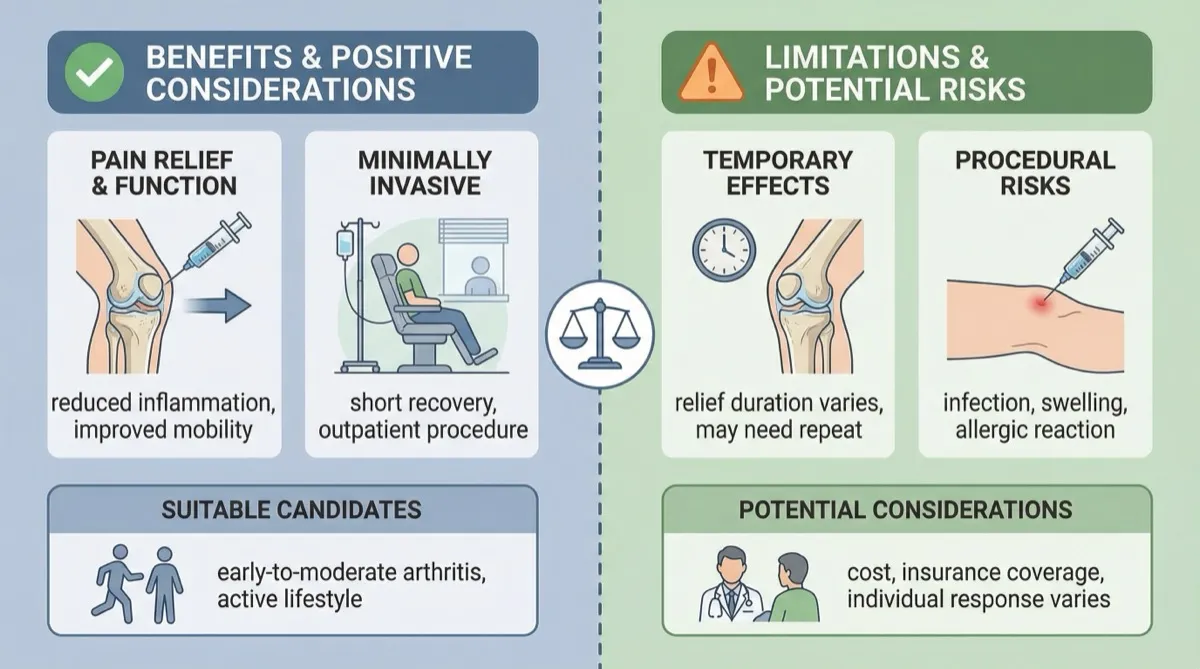
While viscosupplementation helps many patients, it’s not the right solution for everyone:
-
Advanced Arthritis: Patients with severe, bone-on-bone osteoarthritis may find gel injections less effective [1][5]
-
Joint Infection: Active knee infection is a contraindication for viscosupplementation
-
Allergies: Patients allergic to hyaluronic acid or avian proteins (used in some formulations) should avoid certain products
-
Unrealistic Expectations: Some patients don’t experience significant improvement. Recent research indicates variable effectiveness, with some studies showing limited pain reduction [5]
Your orthopedic specialist can help determine if you’re a good candidate for gel injections based on arthritis severity, overall health, and treatment goals.
The Bottom Line on Gel Injection Duration
Knee gel injections typically provide pain relief lasting approximately six months, with many patients experiencing benefits extending up to a year or more. Individual results vary based on arthritis severity, body weight, activity level, the specific hyaluronic acid formulation used, and how well you maintain complementary treatments like physical therapy and weight management.
The gradual onset of relief—usually reaching peak effectiveness 4-6 weeks after treatment—requires patience but offers substantial benefits for appropriate candidates. Unlike cortisone injections, gel shots can be safely repeated without increasing risks or decreasing effectiveness.
If you’re considering viscosupplementation for knee osteoarthritis, working closely with an experienced orthopedic specialist ensures optimal treatment selection, injection technique, and comprehensive care that maximizes your results.
Get Expert Viscosupplementation Treatment
At Joint Relief Institute, our specialized physicians focus exclusively on non-surgical treatments for knee osteoarthritis. We use advanced imaging guidance for precise injection placement and develop comprehensive treatment plans that combine viscosupplementation with physical therapy, weight management support, and lifestyle modifications.
Ready to learn if gel injections are right for your knee pain? Call (800) 238-9307 to schedule a consultation with one of our knee pain specialists. We’ll evaluate your condition, discuss your treatment options, and create a personalized plan to help you return to the activities you love.
Sources
-
Cleveland Clinic. “Knee Gel Injections (Viscosupplementation): Uses & Side Effects.” Cleveland Clinic, 2024. https://my.clevelandclinic.org/health/procedures/knee-gel-injections-viscosupplementation
-
Hospital for Special Surgery. “What to Know About Knee Gel Injections (Viscosupplementation).” HSS.edu, 2024. https://www.hss.edu/health-library/conditions-and-treatments/knee-gel-injections-viscosupplementation
-
Knee Pain Centers of America. “What to Expect After Knee Gel Injections Timeline Relief.” KPCA Blog, 2024. https://www.kneepaincentersofamerica.com/blog/how-long-for-knee-gel-injections-to-work
-
Knee Pain Centers of America. “Maximize Knee Gel Injection Results.” KPCA Blog, 2024. https://www.kneepaincentersofamerica.com/blog/how-long-do-viscosupplementation-effects-last
-
American Academy of Orthopaedic Surgeons. “Viscosupplementation for Knee Arthritis.” OrthoInfo - AAOS, 2024. https://orthoinfo.aaos.org/en/treatment/viscosupplementation-treatment-for-knee-arthritis/
-
Knee Pain Centers of America. “Viscosupplementation Treatment Duration Factors.” KPCA Blog, 2024. https://www.kneepaincentersofamerica.com/blog/how-long-does-viscosupplementation-relief-last
-
Dr. Louis Rizio. “PRP vs Gel (HA) vs Steroid Injection for Knee Arthritis.” Dr. Rizio Biologic Osteoarthritis Care, 2025. https://drrizio.com/2025/07/15/prp-vs-gel-ha-vs-steroid-injection-for-knee-arthritis/
-
Pure Sport Medicine Group & Contura Orthopaedics. “Arthrosamid Four-Year Data for Knee Osteoarthritis Treatment.” Arthrosamid News, 2025. https://arthrosamid.com/en-CA/post/patient-access-to-innovative-procedure-for-treating-knee-osteoarthritis-set-to-grow-in-2025-as-the-pure-sport-medicine-group-partners-with-contura-orthopaedics