“Bone-on-bone” is one of the most common phrases I hear from patients walking into our clinic for the first time. They’ve been told their cartilage is gone, their only option is surgery, and gel injections won’t help. In many cases, that’s not the full picture.
After treating over 40,000 patients at Joint Relief Institute since 2015, I can tell you this: gel injections absolutely can help patients with significant cartilage loss—but the answer depends on how severe your arthritis actually is, how the injections are performed, and what “help” means to you.
Let me walk you through what the clinical evidence shows, what we’ve seen in practice, and how to determine if gel injections are worth trying before committing to surgery. For a comprehensive overview of every treatment option from conservative therapy to surgery, see our complete bone-on-bone treatment guide.
What “Bone-on-Bone” Really Means: The Kellgren-Lawrence Scale
Not all “bone-on-bone” knees are the same. Orthopedic surgeons use the Kellgren-Lawrence (KL) grading system to classify the severity of knee osteoarthritis on a scale of 0 to 4 [1]:
| KL Grade | What It Means | Cartilage Status |
|---|---|---|
| Grade 0 | Normal | Healthy cartilage |
| Grade 1 | Doubtful | Minor wear, possible bone spurs |
| Grade 2 | Mild | Definite bone spurs, possible joint space narrowing |
| Grade 3 | Moderate | Multiple bone spurs, definite joint space narrowing, some sclerosis |
| Grade 4 | Severe | Large bone spurs, marked narrowing, significant bone-on-bone contact |
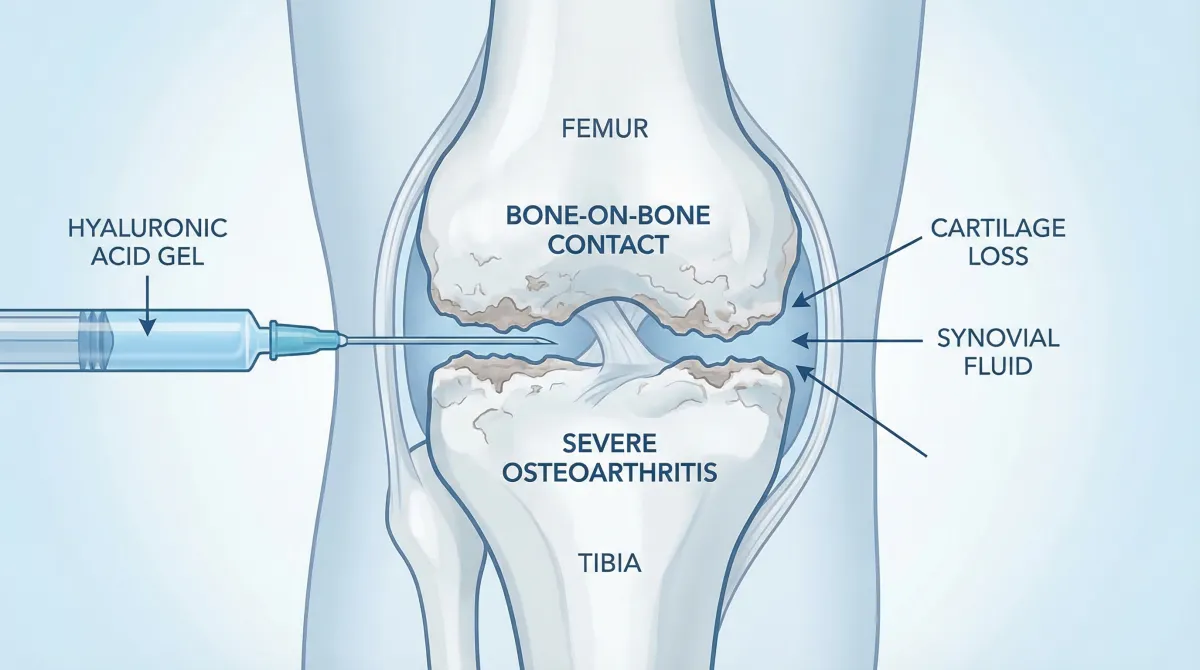
Here’s the important distinction: many patients told they have “bone-on-bone” actually fall into KL Grade 3 (moderate), where there’s still cartilage present—just significantly reduced. True bone-on-bone contact throughout the joint (KL Grade 4) is the most advanced stage, but even these patients may benefit from treatment in certain circumstances.
The Clinical Evidence: Do Gel Injections Work for Severe Arthritis?
The honest answer is: yes, for most patients—with realistic expectations.
A comprehensive real-world study tracking 782 patients across 16 clinics over six years provides the clearest picture of what to expect [2]:
Single Treatment Course Results
- 38% average improvement in pain scores
- 73.6% of patients experienced at least 50% pain reduction
- 88.7% overall satisfaction rate
Multiple Treatment Courses (Key for Bone-on-Bone Patients)
This is where the data gets particularly relevant for severe arthritis:
- 66% improvement in pain scores after four treatment courses
- 74% improvement in pain during daily activities
- 61% improvement in joint stiffness
- 79% six-month satisfaction rate
The cumulative benefit matters. A single course of gel injections may provide moderate relief for a bone-on-bone knee. But patients who commit to repeated courses every six months often experience dramatically better outcomes—similar to how regular oil changes keep an aging engine running far longer than a single service visit [2].
What European Guidelines Say
The 2024 EUROVISCO consensus guidelines—the most current expert recommendations on viscosupplementation—confirmed that patients with moderate-to-severe osteoarthritis can benefit from hyaluronic acid injections, particularly when [3]:
- They’ve failed other conservative treatments
- They want to delay or avoid surgery
- The injections are placed accurately into the joint space
How Gel Injections Work in a Damaged Knee
In a healthy knee, synovial fluid acts as both lubricant and shock absorber. Osteoarthritis degrades this fluid, leaving joints grinding with reduced cushioning.
Viscosupplementation introduces hyaluronic acid—a substance naturally found in joint fluid—directly into the knee. Even in a severely arthritic knee, this serves several purposes [4]:
- Restores lubrication between remaining cartilage and bone surfaces
- Provides cushioning that reduces impact during weight-bearing
- Reduces inflammation by modifying the joint’s biochemical environment
- May slow further cartilage degradation through protective effects on existing tissue
For bone-on-bone patients specifically, the lubrication and cushioning effects are especially valuable. Even when cartilage is significantly diminished, reducing the friction between joint surfaces can meaningfully decrease pain and improve function.
Why Fluoroscopy Matters More for Bone-on-Bone Knees
Here’s something most patients don’t realize: in a severely arthritic knee, the joint space is dramatically narrower than in a healthy knee. This makes accurate needle placement significantly more difficult [5].
Studies show that even experienced physicians miss the knee joint space up to 30% of the time when injecting without imaging guidance [5]. In a bone-on-bone knee, where the target space may be just millimeters wide, blind injection accuracy is even worse.
At Joint Relief Institute, we use fluoroscopy (real-time X-ray guidance) for every single injection. This guarantees the hyaluronic acid reaches the joint space—not the surrounding tissue where it can’t do its job. For bone-on-bone patients, this precision isn’t a luxury. It’s the difference between a treatment that works and one that doesn’t.
Treatment Comparison: Your Options for Bone-on-Bone Knees
| Treatment | Pain Relief Duration | Recovery | Cost (with Medicare) | Cartilage Impact | Invasiveness |
|---|---|---|---|---|---|
| Gel injections | 6+ months per course | None (same day) | ~$100–$250/series | May protect remaining | Minimal |
| Cortisone shots | 2–3 months | None | ~$50–$150 | May accelerate damage | Minimal |
| Physical therapy | Ongoing (while active) | N/A | Copay per visit | Neutral | None |
| Knee replacement | 15–20 years | 3–6 months rehab | $5,000+ OOP | Replaces joint | Major surgery |
| Do nothing | N/A | N/A | $0 | Progressive damage | N/A |
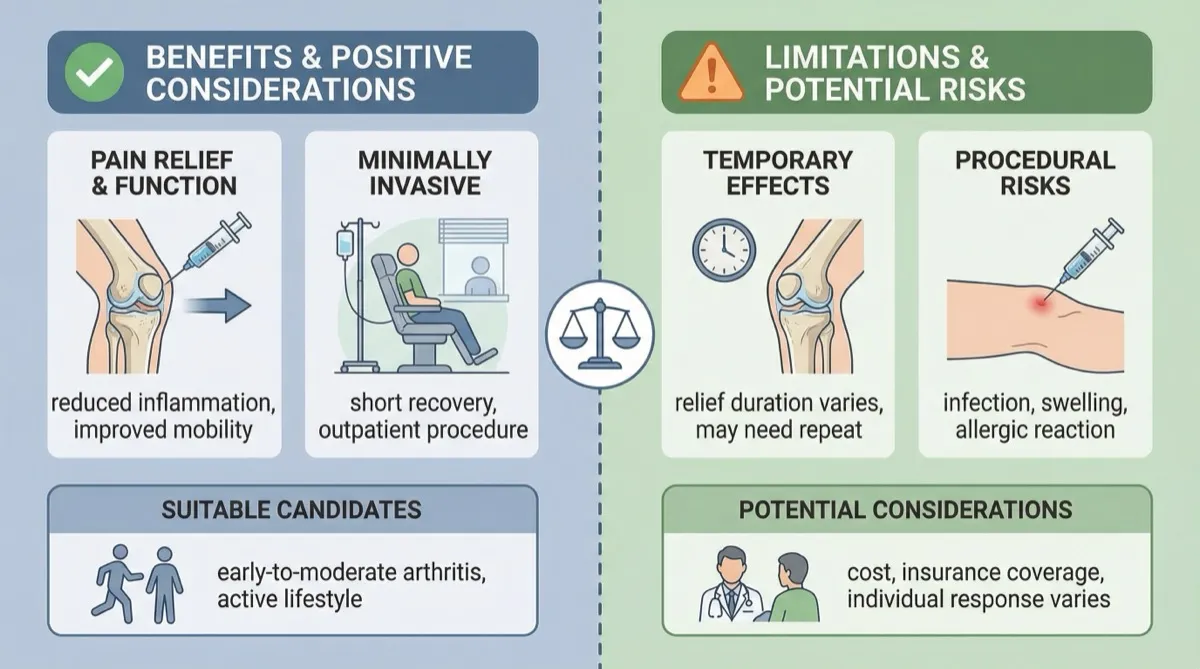
For many bone-on-bone patients, gel injections represent the best middle ground—meaningful relief without the risks, recovery, and costs of surgery. Learn more about cortisone vs. gel injections to understand why viscosupplementation often outperforms steroids for longer-term management.
Medicare Coverage for Bone-on-Bone Patients
Good news: most bone-on-bone patients are strong candidates for Medicare coverage because they’ve typically already completed the required conservative treatment trials. Medicare Part B covers viscosupplementation for qualifying patients, with most paying only the 20% coinsurance after their deductible [6].
Medicare allows repeat treatments every six months—aligning perfectly with the treatment schedule that produces the best outcomes in clinical studies.
Who Should Try Gel Injections (and Who Shouldn’t)
Ideal Candidates for Gel Injections
After treating tens of thousands of patients, I’ve identified the characteristics that predict the best outcomes:
- KL Grade 2–3 (mild to moderate arthritis with cartilage still present)
- KL Grade 4 patients willing to commit to repeated courses every 6 months (see all bone-on-bone knee treatment options)
- Patients who have tried physical therapy and medication without adequate relief
- Those who want to delay surgery as long as possible
- Patients who value maintaining their current activity level
- Those with realistic expectations about gradual (not instant) improvement
When I Recommend Surgery Instead
I believe in honest conversations with my patients. At Joint Relief Institute, we’ll recommend knee replacement when it’s truly the best option—even though it means we’re not the ones providing the treatment. I refer patients to surgery when:
- Multiple courses of viscosupplementation provide diminishing returns
- Pain is so severe that it significantly limits basic daily functions despite treatment
- Imaging shows structural joint damage beyond what conservative treatment can address
- The patient’s quality of life would be better served by surgical intervention
The key point: trying gel injections first doesn’t mean choosing instead of surgery. It means exploring a low-risk option that may provide years of relief before surgery becomes necessary—and if you eventually need a replacement, you’ll have maintained better joint function and overall fitness in the meantime.
What Our Bone-on-Bone Patients Say
“My doctor told me I was bone-on-bone and needed a knee replacement. I decided to try gel injections first. Three years and six treatment series later, I’m still walking my dog every morning and gardening on weekends.”
— Robert M.
“I was skeptical that anything could help at my stage. After the second round of injections, I noticed I could get up from a chair without wincing. That was enough to keep going.”
— Dorothy K.
These outcomes aren’t guaranteed—every patient is different. But they represent the experience of many patients who were told their only option was surgery. For a deeper look at real-world patient satisfaction data, see our article on whether viscosupplementation is worth it [7].
Frequently Asked Questions
How long do gel injections last for bone-on-bone knees?
Most patients experience relief for 6–12 months per treatment series. Patients with more severe arthritis may find that relief duration is shorter initially but improves with subsequent treatment courses. Studies show that the cumulative benefit of multiple courses increases over time [2][8].
Are gel injections painful?
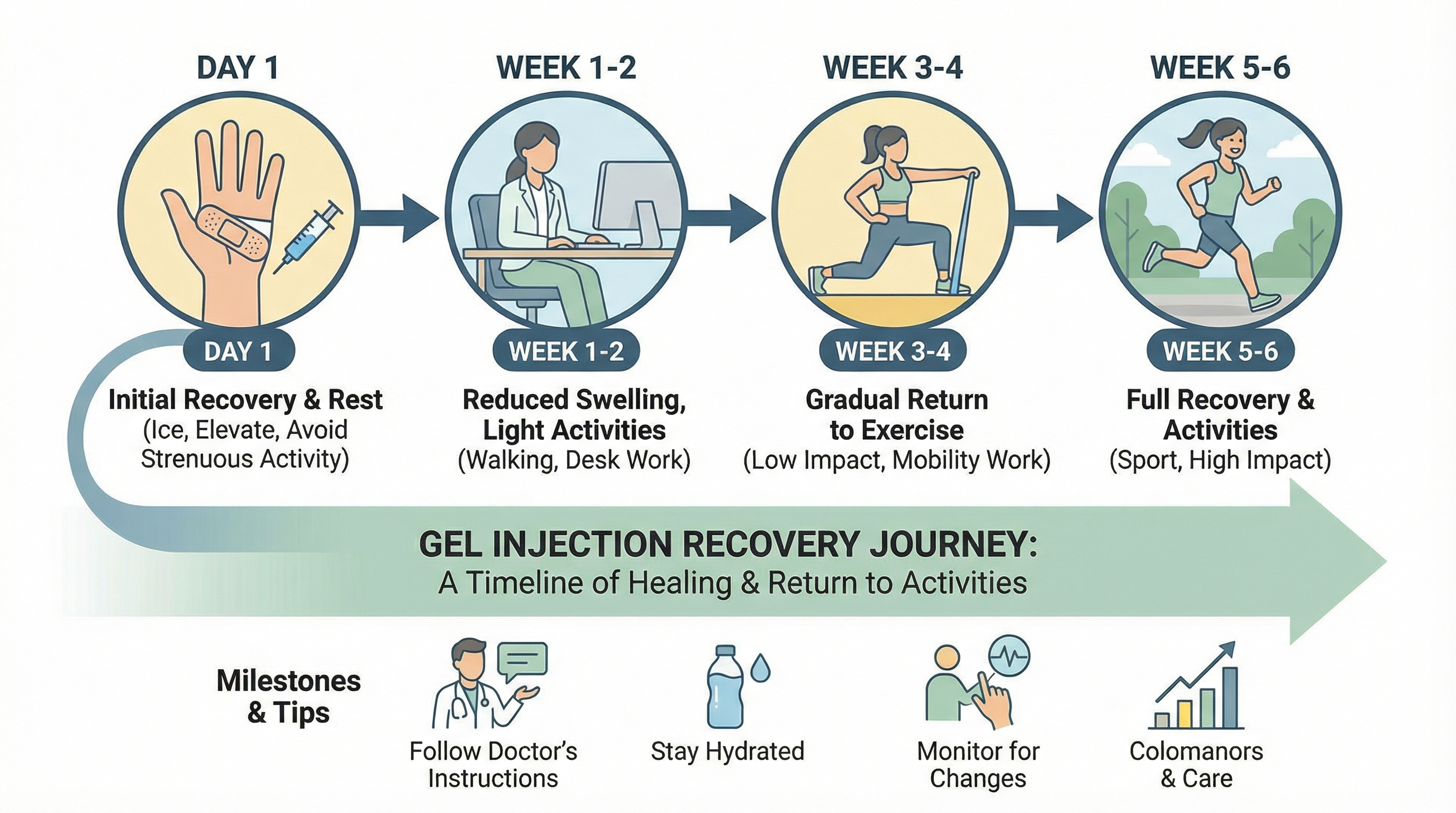
The injection itself involves minimal discomfort—comparable to a standard injection. Because we use fluoroscopy guidance, the procedure is precise and typically completed in 5–10 minutes. Some patients experience mild swelling for 1–2 days afterward.
How many treatment courses will I need?
This varies by patient. Some achieve excellent long-term results after 3–5 series. Others benefit from ongoing treatment every 6 months. Clinical data shows that patients who continue treatment see progressively better outcomes with each course [2].
Can I get gel injections if I’ve already had cortisone shots?
Yes. Many of our patients transition from cortisone to viscosupplementation for longer-lasting relief. You may need to wait a few weeks between treatments. Discuss your injection history with your physician.
What if gel injections don’t work for me?
Not every patient responds to viscosupplementation, particularly those with the most advanced joint destruction. If you don’t experience adequate relief, we’ll discuss other options honestly—including surgical referral if appropriate. Trying gel injections first doesn’t limit your future treatment options.
Find Out If Gel Injections Are Right for Your Knees
The only way to know whether your bone-on-bone knees will respond to viscosupplementation is a proper evaluation by physicians who specialize in this treatment.
At Joint Relief Institute, we’ll:
- Evaluate you at a legitimate, specialized clinic focused exclusively on joint injections
- Review your imaging to determine your exact KL grade
- Evaluate your treatment history to assess candidacy
- Verify your insurance coverage before proceeding
- Give you an honest recommendation—even if that means referring you to a surgeon
Call (800) 238-9307 today to schedule your evaluation. We’ve helped over 40,000 patients make informed decisions about their knee pain—and we’ll help you make yours.
Sources
-
Kellgren-Lawrence Grading System for Knee Osteoarthritis Classification. Radiology Reference, 2023. https://radiopaedia.org/articles/kellgren-and-lawrence-system-for-classification-of-osteoarthritis
-
Long-Term Outcomes of Single versus Multiple Courses of Viscosupplementation for Osteoarthritic Knee Pain: Real-World, Multi-Practice Experience Over a Six-Year Period. PMC, 2021. https://pmc.ncbi.nlm.nih.gov/articles/PMC8364370/
-
EUROVISCO Consensus Guidelines for the Use of Hyaluronic Acid Viscosupplementation in Knee Osteoarthritis Based on Patient Characteristics. Journal of Orthopaedic Surgery and Research, 2024. https://journals.sagepub.com/doi/10.1177/19476035241271970
-
A Comprehensive Review of Viscosupplementation in Osteoarthritis of the Knee. Orthopedic Reviews, 2021. https://orthopedicreviews.openmedicalpublishing.org/article/25549
-
Accuracy of Blind vs. Image-Guided Intra-Articular Knee Injections. Journal of Clinical Medicine, 2022. https://www.mdpi.com/journal/jcm
-
Medicare Coverage for Hyaluronic Acid Injections for Knee Osteoarthritis. Centers for Medicare & Medicaid Services, 2025. https://www.cms.gov/medicare-coverage-database/
-
Viscosupplementation Worth It: Patient Outcomes. Joint Relief Institute Blog. https://jointreliefinstitute.com/blog/is-viscosupplementation-worth-it
-
How Long Do Gel Injections Last? Joint Relief Institute Blog. https://jointreliefinstitute.com/blog/how-long-do-gel-injections-last