Knee Pain Worse After Gel Injection? What’s Normal vs. Concerning
If your knee pain has intensified after receiving gel injections, you’re not alone—and in most cases, you’re experiencing a normal reaction. Temporary discomfort following viscosupplementation is one of the most common concerns patients bring to us at Joint Relief Institute, and understanding what to expect can help ease your worry.
Gel injections, also called viscosupplementation or hyaluronic acid injections, are designed to lubricate your knee joint and reduce osteoarthritis pain. While these treatments help thousands of patients find relief, the initial post-injection period can sometimes feel counterintuitive: you came in seeking pain relief, but now your knee hurts more than before.
Let’s explore what’s happening in your knee, when increased pain is normal, and when you should contact your doctor.
What Are Gel Injections and How Do They Work?
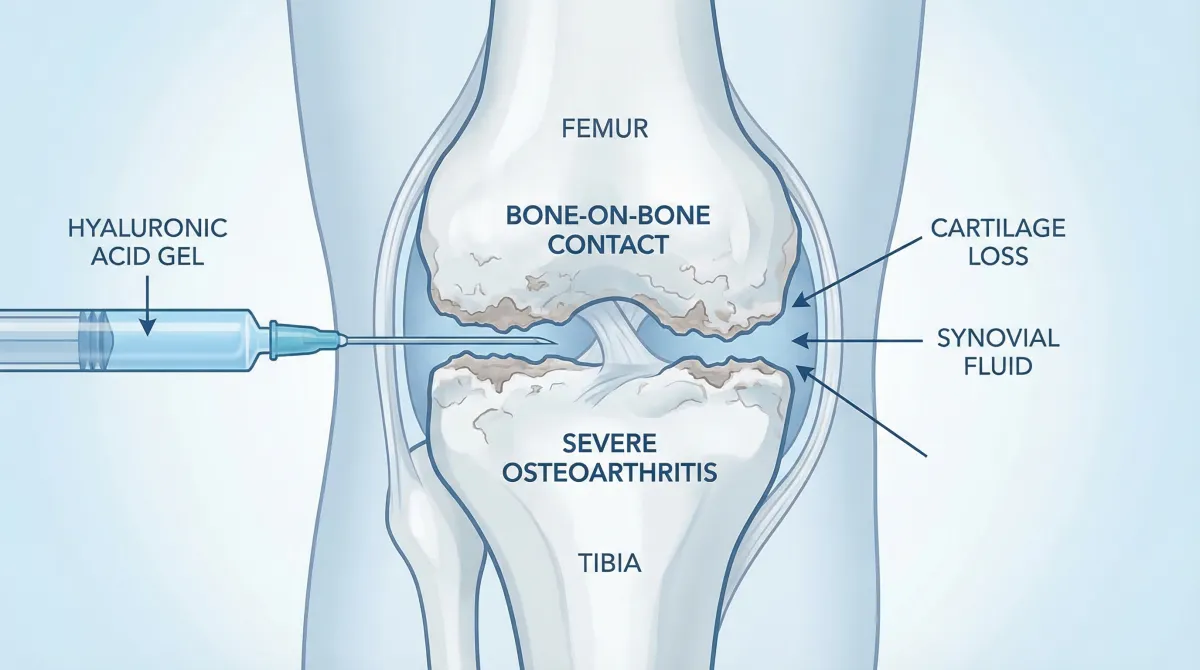
Gel injections deliver hyaluronic acid directly into your knee joint. This substance naturally occurs in healthy joint fluid, acting as both a lubricant and shock absorber. In osteoarthritis, your body produces less hyaluronic acid, leading to increased friction and pain [1].
The treatment typically involves one to five shots over several weeks, depending on the specific product used. Before injecting the gel, your doctor may remove excess fluid if your knee is swollen [2].
Why Does My Knee Hurt More After the Injection?
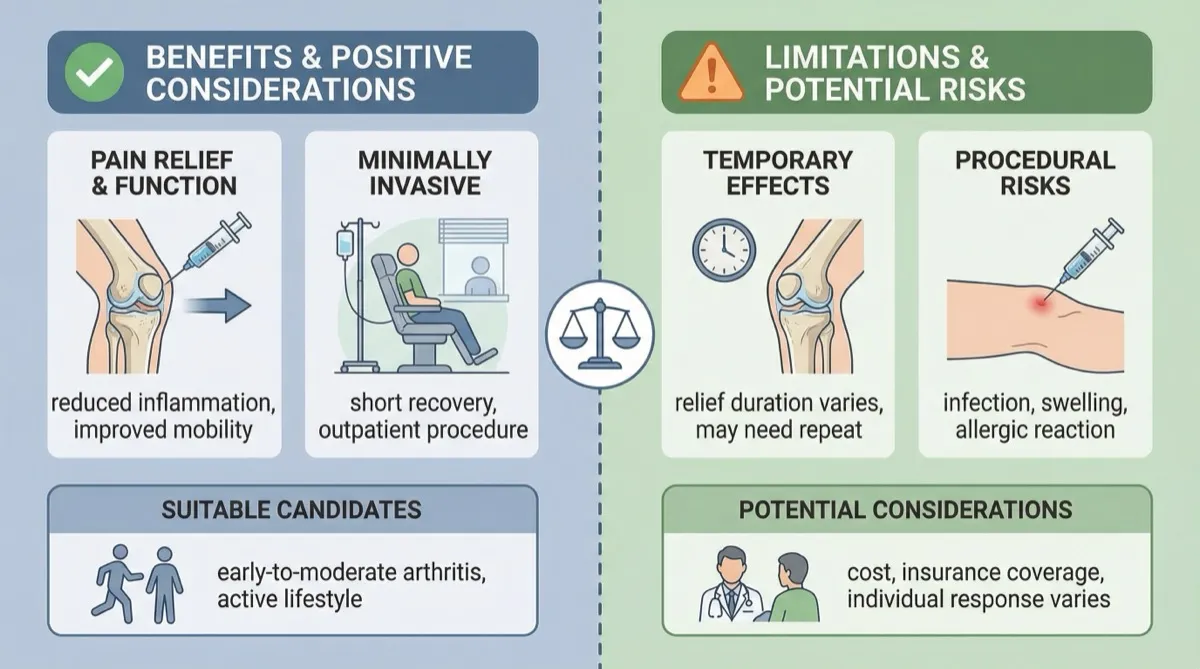
The most common reason for increased knee pain after gel injections is a localized inflammatory response. Your body recognizes the injected substance as foreign, triggering a mild immune reaction at the injection site [3].
Common causes of temporary post-injection pain include:
- Local inflammation: The injection itself can irritate surrounding tissues
- Increased joint pressure: The added fluid volume temporarily stretches the joint capsule
- Normal healing response: Your body’s natural reaction to any needle puncture
- Muscle tension: Protective guarding around the injection site
According to Cleveland Clinic, this reaction typically manifests as “mild pain and swelling at the injection site” and resolves without intervention [3].
What’s Normal: Expected Post-Injection Symptoms
Most patients experience some degree of discomfort following gel injections. Understanding what’s considered normal can prevent unnecessary anxiety.
Typical Post-Injection Timeline
First 24-48 hours:
- Mild to moderate pain at the injection site
- Localized warmth and redness
- Slight swelling around the knee
- Temporary stiffness or reduced range of motion
Days 2-3:
- Gradual reduction in swelling
- Decreased pain and tenderness
- Return to normal mobility
- Possible “spongy” sensation when walking [4]
The American Academy of Orthopaedic Surgeons notes that patients should “avoid excessive activity, such as jogging or heavy lifting” for the first 48 hours after injection [2].
How to Manage Normal Post-Injection Pain
Ice application: Apply ice wrapped in a towel for 15-20 minutes every few hours during the first 48 hours [3].
Activity modification: Limit weight-bearing activities while allowing light walking. Complete bed rest isn’t necessary, but avoid:
- Running or jogging
- Climbing multiple flights of stairs repeatedly
- Heavy lifting or squatting
- High-impact sports
Elevation: Keep your leg elevated when sitting or lying down to reduce swelling.
Over-the-counter pain relief: Acetaminophen can help manage discomfort. Consult your doctor before taking NSAIDs (ibuprofen, naproxen), as some physicians prefer avoiding these immediately after injection.
What’s Concerning: When to Call Your Doctor
While temporary pain is normal, certain symptoms warrant immediate medical attention. These red flags may indicate complications requiring treatment.
Contact Your Doctor Immediately If You Experience:
Severe pain: Pain that worsens progressively after 48 hours or becomes unbearable [3]
High fever: Temperature above 100.4°F (38°C), which could indicate infection
Severe swelling: Significant joint swelling that increases rather than decreases after 2-3 days
Numbness or tingling: These neurological symptoms require prompt evaluation [3]
Signs of infection:
- Increasing redness spreading beyond the injection site
- Hot skin around the knee
- Red streaks extending from the injection site
- Discharge or drainage
Inability to bear weight: If you cannot put any weight on your leg 24 hours after injection
Understanding Post-Injection Flare Reactions
Approximately 1% of patients experience what’s called an “injection flare”—a more pronounced inflammatory reaction than typical post-injection discomfort [3].
Characteristics of an Injection Flare:
- Significant fluid accumulation in the joint
- Substantial swelling and pain
- Symptoms appearing within 4 hours to several days after injection
- More intense than expected post-injection discomfort
If you develop an injection flare, contact your healthcare provider. They can aspirate (remove) the excess fluid to provide rapid relief [3]. This reaction, while uncomfortable, typically resolves with proper management and doesn’t indicate treatment failure.
Rare but Serious: Pseudoseptic Arthritis
In very rare cases, patients develop pseudoseptic arthritis—a condition that mimics joint infection but isn’t caused by bacteria. Symptoms include severe pain, significant swelling, warmth, and restricted movement [5].
This reaction requires immediate medical evaluation to distinguish it from true infection and provide appropriate treatment. While uncommon, awareness of this possibility ensures prompt care if symptoms develop.
How Injection Accuracy Affects Complications
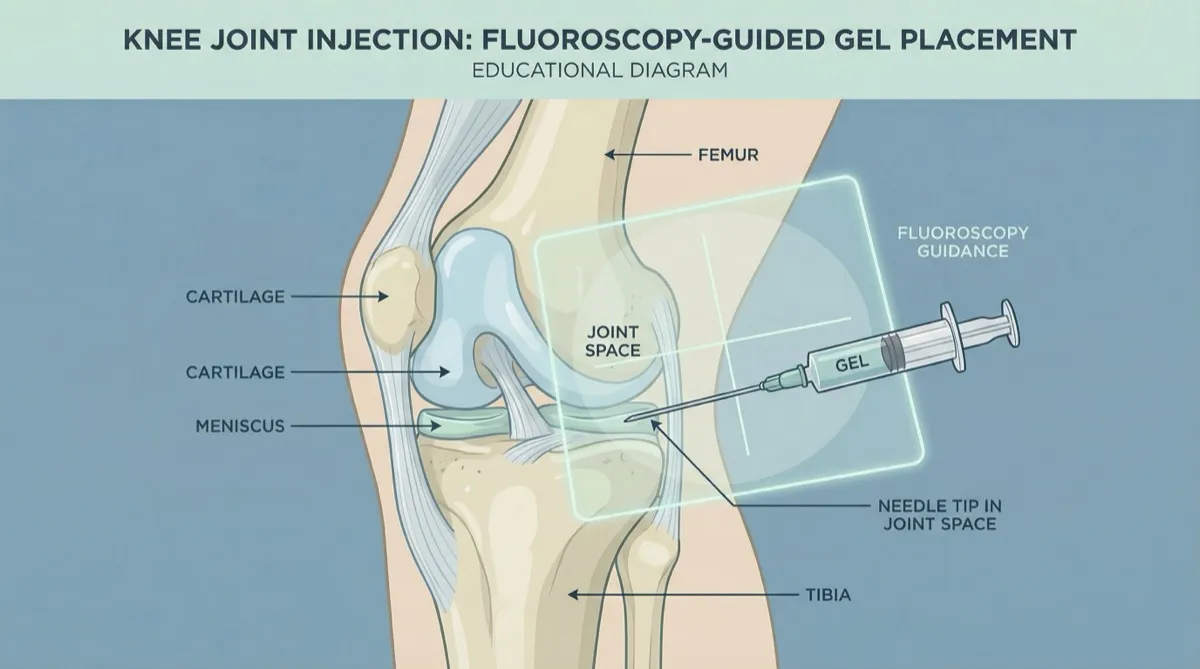
One factor that significantly impacts post-injection complications is whether the medication actually reaches the joint space. Research shows that non-guided injections miss the joint up to 30% of the time [6].
When medication is inadvertently injected into surrounding soft tissue, fat pads, or ligaments instead of the joint space, several problems can occur:
- Reduced effectiveness (medication isn’t where it needs to be)
- Increased pain and inflammation in surrounding tissues
- Higher risk of post-injection flare reactions
- Unnecessary tissue trauma
The Fluoroscopy Advantage
At Joint Relief Institute, Dr. Michael Hana and our team use fluoroscopy guidance for all gel injections. This real-time X-ray technology allows us to visualize the knee joint during injection, ensuring precise needle placement [6].
Benefits of fluoroscopy-guided injections include:
- Confirmed accuracy: Direct visualization ensures medication enters the joint space
- Reduced complications: Minimizes risk of soft tissue injection and associated inflammation
- Improved outcomes: Patients experience better pain relief when medication reaches the intended target [7]
- Enhanced safety: Real-time imaging helps avoid blood vessels, nerves, and other structures
Studies demonstrate that fluoroscopy-guided injections result in “significant pain relief and improved joint function compared to those who received traditional blind injections” [7].
What About Allergic Reactions?
True allergic reactions to hyaluronic acid are rare, as it’s a substance naturally found in your body. However, some patients may react to other components in the injection formulation.
Symptoms of an allergic reaction may include:
- Itching or rash
- Hives or welts
- Difficulty breathing
- Swelling of the face, lips, or tongue
If you experience any signs of an allergic reaction, seek immediate medical care.
When Should Pain Relief Begin?
Many patients wonder when they’ll feel improvement after gel injections. It’s important to understand that viscosupplementation isn’t an immediate pain reliever like cortisone injections.
According to the American Academy of Orthopaedic Surgeons, “it may take several weeks to notice an improvement” [2]. Some patients begin experiencing relief within 2-3 weeks, while others require the full series of injections before noticing benefits.
Pain relief, when achieved, typically lasts several months. Some patients report 6-12 months of improved function and reduced discomfort.
Frequently Asked Questions
How long should knee pain last after gel injection?
Mild pain and swelling typically resolve within 48-72 hours. If pain persists or worsens beyond three days, contact your healthcare provider for evaluation [3].
Can I walk immediately after gel injection?
Yes, light walking is encouraged. However, avoid heavy use of your knee for 48 hours, including jogging, heavy lifting, or prolonged standing [2][3].
Should I use ice or heat after gel injection?
Ice is recommended for the first 48 hours to reduce swelling and pain. Apply ice wrapped in a towel for 15-20 minutes several times daily [3].
Is it normal for my knee to feel stiff after gel injection?
Yes, temporary stiffness or a “spongy” sensation when walking may last 2-3 days and is considered normal [4].
Can gel injections cause infection?
Joint infection following gel injection is very rare. However, severe pain, fever, increasing swelling, or warmth could indicate infection and requires immediate medical evaluation [2][3].
What if my pain doesn’t improve after gel injections?
Response to viscosupplementation varies among patients. If you don’t experience relief after completing the full series, discuss alternative treatments with your doctor. Options may include other injection therapies, physical therapy, or regenerative medicine approaches.
How does fluoroscopy guidance reduce complications?
Fluoroscopy uses real-time X-ray imaging to ensure accurate needle placement within the joint space. This precision reduces the risk of soft tissue injection, which can cause increased inflammation and reduced effectiveness [6][7].
When Gel Injections May Not Be Right
While gel injections help many patients, they’re not appropriate for everyone. Your doctor may recommend alternative treatments if you have:
- Active joint infection
- Severe, bone-on-bone arthritis with minimal joint space
- Bleeding disorders or current anticoagulation therapy
- Allergies to hyaluronic acid products
- Skin infections near the injection site
Why Choose Joint Relief Institute
At Joint Relief Institute, we’ve performed over 400,000 procedures for more than 40,000 patients, maintaining a 4.9 Google rating through our commitment to precision and patient care.
What sets us apart:
- Fluoroscopy-guided precision: Every injection is performed under real-time imaging guidance for maximum accuracy and reduced complications
- Experienced specialists: Led by Dr. Michael Hana, our team specializes exclusively in non-surgical joint pain treatment
- Comprehensive approach: We evaluate each patient individually to recommend the most appropriate treatment
- Insurance accepted: We accept Medicare and most insurance plans
If you’re experiencing knee pain after gel injections that doesn’t fit the normal pattern, or if you’re considering viscosupplementation and want to ensure the most accurate, effective treatment, we’re here to help.
Take the Next Step
Don’t let knee pain keep you from the activities you love. Whether you’re experiencing complications after gel injections elsewhere or seeking treatment with proven precision techniques, Joint Relief Institute can help.
Contact us today:
- Phone: (800) 238-9307
- Experienced evaluation of your specific situation
- Discussion of fluoroscopy-guided injection benefits
- Personalized treatment recommendations
Remember, while temporary pain after gel injections is common, you should never ignore symptoms that concern you. Trust your instincts and seek medical evaluation when something doesn’t feel right.
Sources
-
Hospital for Special Surgery. “What to Know About Knee Gel Injections (Viscosupplementation).” HSS Health Library, 2024. https://www.hss.edu/health-library/conditions-and-treatments/knee-gel-injections-viscosupplementation
-
American Academy of Orthopaedic Surgeons. “Viscosupplementation for Knee Arthritis.” OrthoInfo, 2024. https://orthoinfo.aaos.org/en/treatment/viscosupplementation-treatment-for-knee-arthritis/
-
Cleveland Clinic. “Knee Gel Injections (Viscosupplementation): Uses & Side Effects.” Cleveland Clinic Health Library, 2024. https://my.clevelandclinic.org/health/procedures/knee-gel-injections-viscosupplementation
-
Mayo Clinic. “Hyaluronic acid (injection route) - Side effects & uses.” Mayo Clinic Drug Information, 2024. https://www.mayoclinic.org/drugs-supplements/hyaluronic-acid-injection-route/description/drg-20074557
-
National Center for Biotechnology Information. “Viscosupplementation of the knee: Three cases of acute Pseudoseptic Arthritis with painful and irritating complications.” PMC, 2024. https://pmc.ncbi.nlm.nih.gov/articles/PMC5335889/
-
The Procedure Guide. “Fluoroscopic Guided Knee Joint Injection – Technique and Overview.” 2024. https://theprocedureguide.com/fluoroscopic-guided-knee-joint-injection/
-
Arthritis Knee Pain Centers. “What Is a Fluoroscopy Injection?” Wellness Blog, 2024. https://arthritiskneepain.com/wellness-blog/what-is-a-fluoroscopy-injection/
-
ScienceDirect. “Severe acute localized reactions after intra-articular hyaluronic acid injections: a narrative review and physician’s guide to incidence, prevention, and management.” 2024. https://www.sciencedirect.com/science/article/pii/S2667254524000234