Viscosupplementation Cost: What to Expect and How to Save
If you’re living with knee osteoarthritis, you’ve likely heard about viscosupplementation—hyaluronic acid injections that can provide lasting relief. But one of the first questions patients ask is: how much does viscosupplementation cost?
The answer depends on several factors, including your insurance coverage, geographic location, and treatment plan. Understanding the investment in viscosupplementation helps you make informed decisions about managing your knee pain while avoiding the much higher costs of surgery.
What is Viscosupplementation?
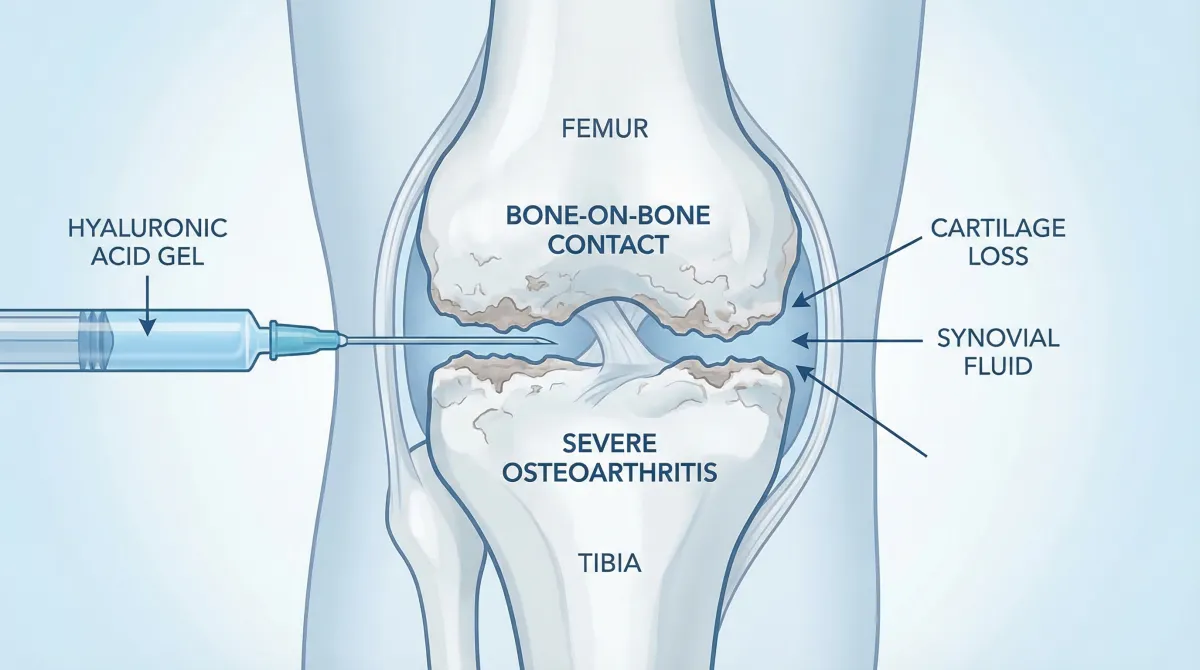
Viscosupplementation is a minimally invasive treatment that involves injecting hyaluronic acid directly into the knee joint to restore lubrication and cushioning. This FDA-approved therapy helps reduce pain, improve mobility, and delay or potentially avoid the need for knee replacement surgery in patients with osteoarthritis [1].
How Much Does Viscosupplementation Cost?
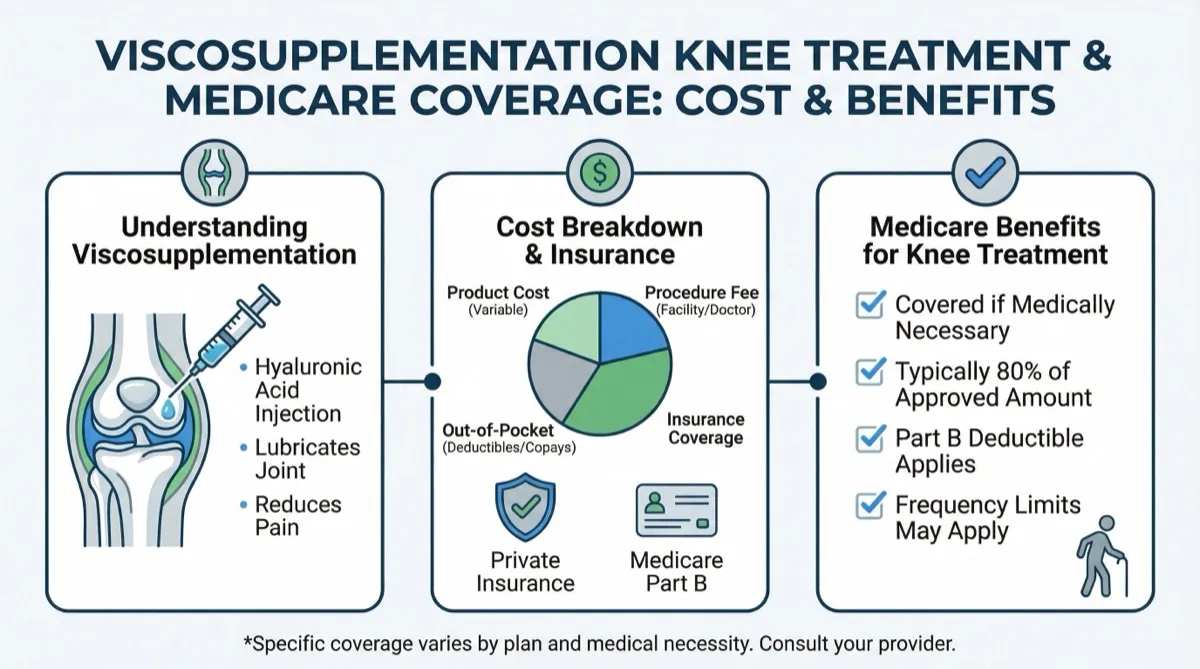
Viscosupplementation typically costs between $300 and $1,000 per injection, with a complete treatment series totaling around $1,500 on average [2]. For patients paying out-of-pocket without insurance, costs can range from $1,000 to $2,500 for a full series [3].
Cost Breakdown by Treatment Type
Single-Injection Products:
- Cost per treatment: $500-$1,200
- Requires one office visit
- Examples: Synvisc-One, Gel-One
Multi-Injection Series:
- Cost per dose: $300-$1,000
- Typically requires 3-5 injections
- Total series cost: $1,200-$3,000
- Administered weekly over several weeks
The specific brand of hyaluronic acid prescribed affects the total cost, with newer formulations often priced higher than traditional options.
Factors That Affect Viscosupplementation Pricing
Several variables influence what you’ll pay for viscosupplementation treatment:
1. Geographic Location
Urban medical centers typically charge more than rural facilities due to higher overhead costs and demand. Regional cost-of-living differences can create price variations of 30% or more between locations [2].
2. Healthcare Provider Experience
Board-certified orthopedic specialists and practices with established reputations may charge premium rates. However, experienced providers often deliver more precise injections with better outcomes, potentially reducing the need for repeat treatments.
3. Type of Hyaluronic Acid
Different brands and formulations vary significantly in price:
- Standard HA formulations: Lower cost range
- Cross-linked HA products: Mid-range pricing
- High molecular weight HA: Premium pricing
4. Facility Type
Where you receive treatment impacts costs:
- Hospital outpatient departments: Highest costs (facility fees apply)
- Specialty orthopedic clinics: Mid-range pricing
- Private physician offices: Often most affordable
5. Number of Injections Required
Single-injection products cost more per dose but require fewer office visits, potentially reducing total expenses when considering co-pays and time off work.
Does Medicare Cover Viscosupplementation?
Yes, Medicare Part B covers viscosupplementation when medically necessary. To qualify for Medicare coverage, patients must meet specific criteria [3]:
- Documented diagnosis of symptomatic knee osteoarthritis
- Medical imaging confirming osteoarthritis
- Failed conservative treatments (at least three months of therapies like physical therapy, pain medications, or corticosteroid injections)
Medicare Cost-Sharing
When Medicare covers viscosupplementation:
- Medicare pays 80% of the approved amount
- You pay 20% coinsurance plus your Part B deductible
- With Medicare Supplement plans, out-of-pocket costs may be minimal or zero [4]
Example: If the Medicare-approved amount for a viscosupplementation injection is $800, you would pay approximately $160 (20%) after meeting your deductible.
Private Insurance Coverage for Viscosupplementation
Coverage varies significantly among private insurance plans. Many insurers cover viscosupplementation, but with conditions [5]:
Common Insurance Requirements
- Pre-authorization: Most plans require approval before treatment
- Medical necessity documentation: Proof of osteoarthritis severity
- Failed prior treatments: Evidence that conservative options didn’t work
- Step therapy: Some plans require trying corticosteroid injections first
Important 2026 Coverage Changes
Some insurance carriers have modified viscosupplementation coverage. Patients should verify current coverage with their specific plan, as policies continue to evolve [6].
Working with Your Insurance
To maximize insurance coverage:
- Request pre-authorization before scheduling treatment
- Have your doctor document all failed conservative treatments
- Submit imaging reports showing osteoarthritis severity
- Appeal denials with supporting medical evidence
Comparing Viscosupplementation Costs to Alternative Treatments
Understanding how viscosupplementation pricing compares to other knee osteoarthritis treatments reveals its value proposition [2]:
| Treatment Option | Cost Range | Duration of Relief |
|---|---|---|
| Corticosteroid Injections | $20-$300 per injection | 6-12 weeks |
| Viscosupplementation | $1,500 average series | 6-12 months |
| PRP Injections | $500-$2,500 per treatment | Varies (4-12 months) |
| Knee Replacement Surgery | $30,000-$50,000+ | Lifetime (with revision risk) |
The Long-Term Value: Surgery Delay and Cost Savings
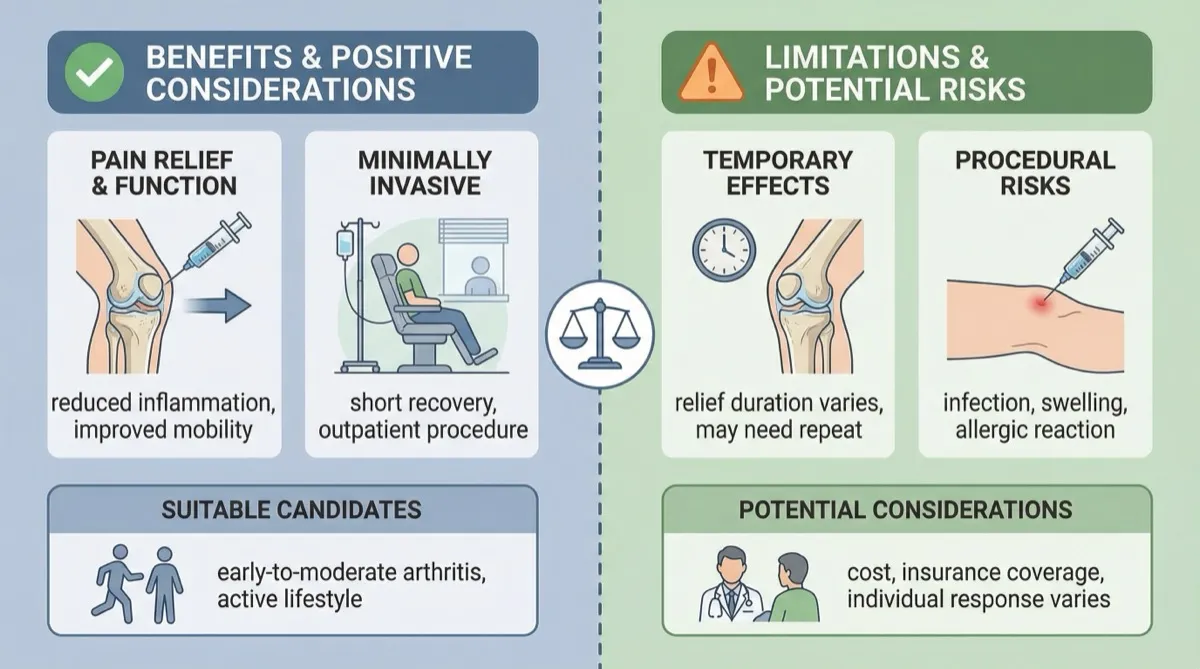
Viscosupplementation can delay knee replacement surgery by approximately 299 to 370 days, with some patients avoiding surgery for several years through repeated treatment courses [7]. This delay provides substantial financial and health benefits.
Potential Cost Savings
Research demonstrates that viscosupplementation generates significant long-term savings [8]:
- Individual savings: Delaying surgery by one to two years translates into hundreds to thousands of dollars in avoided out-of-pocket costs, lost wages, and recovery expenses
- Healthcare system impact: At a population level, modest surgical delays across millions of patients could represent billions of dollars in savings
- Medication cost reduction: Decreased reliance on NSAIDs, corticosteroids, and opioid medications lowers ongoing medication expenses
Why Delaying Surgery Matters
Even if knee replacement eventually becomes necessary, postponing it offers advantages:
- Younger implant age: Prosthetic knees have limited lifespans (15-20 years). Delaying your first replacement reduces the likelihood of needing revision surgery
- Maintained mobility: Continuing normal activities preserves muscle strength and joint health
- Lower immediate costs: Avoiding major surgery saves thousands in deductibles, co-insurance, and rehabilitation expenses
- Reduced work disruption: Non-surgical treatments require minimal recovery time compared to 3-6 months for surgery
Cost-Effectiveness Analysis
Studies show viscosupplementation involves higher short-term costs than basic pain medications but delivers medium and long-term savings by delaying expensive surgical interventions [8]. The treatment reduces overall healthcare burden while maintaining patient quality of life.
Maximizing Affordability: Tips for Reducing Costs
1. Verify Insurance Coverage First
Contact your insurance provider to:
- Confirm viscosupplementation is covered
- Understand pre-authorization requirements
- Determine your out-of-pocket responsibility
- Check which brands are preferred/covered
2. Compare Facility Pricing
Call multiple providers to compare:
- Injection costs at different facilities
- Office visit fees
- Additional charges (imaging, follow-ups)
3. Consider Payment Plans
Many orthopedic practices offer:
- Interest-free payment plans
- Discounts for upfront payment
- Sliding scale fees based on income
4. Use Health Savings Accounts (HSA) or Flexible Spending Accounts (FSA)
Viscosupplementation qualifies as an eligible medical expense, allowing you to pay with pre-tax dollars and save 20-30% on the effective cost.
5. Ask About Single-Injection Options
If you have high co-pays per office visit, single-injection products may cost less overall than multiple-visit treatment series, even if the per-dose price is higher.
6. Explore Patient Assistance Programs
Some pharmaceutical manufacturers offer:
- Co-pay assistance cards
- Patient savings programs
- Financial need-based support
Frequently Asked Questions About Viscosupplementation Costs
How much does viscosupplementation cost without insurance?
Without insurance, expect to pay $1,000-$2,500 for a complete treatment series. Single-injection products typically cost $500-$1,200 per treatment.
Will my insurance cover viscosupplementation?
Many insurance plans cover viscosupplementation when medically necessary, typically requiring documented osteoarthritis and failed conservative treatments. Medicare covers it under Part B with 80% payment.
How often do I need viscosupplementation treatments?
Most patients experience 6-12 months of relief from viscosupplementation. If effective, treatments can be repeated annually or as symptoms return, with some patients receiving injections for several years.
Is viscosupplementation more affordable than knee replacement?
Yes, significantly. A viscosupplementation series costs $1,500 on average, while knee replacement surgery costs $30,000-$50,000 or more, plus extensive recovery time and potential complications.
Can I use my HSA or FSA for viscosupplementation?
Yes, viscosupplementation is an eligible medical expense for Health Savings Accounts and Flexible Spending Accounts, allowing you to pay with pre-tax dollars.
What if my insurance denies coverage?
If denied, you can appeal with supporting documentation from your physician. Many denials are overturned when proper medical necessity is demonstrated, including imaging reports and records of failed conservative treatments.
Are there generic or lower-cost viscosupplementation options?
While there aren’t generic versions of viscosupplementation products, various brands exist at different price points. Discuss options with your provider to find an effective treatment that fits your budget.
Is Viscosupplementation Right for Your Budget and Your Knees?
Viscosupplementation represents a middle-ground investment between temporary pain relief and major surgery. At an average cost of $1,500 per treatment series, it delivers 6-12 months of pain relief while potentially delaying knee replacement for years—saving tens of thousands of dollars in surgical costs.
For patients with insurance, out-of-pocket costs are often minimal. Even without coverage, the investment in viscosupplementation is substantially less than surgery, with no recovery downtime and minimal risks.
The key question isn’t whether you can afford viscosupplementation—it’s whether you can afford not to try it before considering surgery.
Get Expert Viscosupplementation Treatment at Joint Relief Institute
At Joint Relief Institute, we specialize in viscosupplementation and other advanced non-surgical treatments for knee osteoarthritis. Our experienced physicians work with most insurance plans, including Medicare, to make treatment affordable and accessible.
Take the first step toward pain-free movement without surgery:
📞 Call (800) 238-9307 to schedule your consultation today.
Our team will:
- Evaluate your knee condition
- Verify your insurance coverage
- Explain all costs upfront
- Create a personalized treatment plan that fits your budget
Don’t let cost concerns keep you from the relief you deserve. Contact Joint Relief Institute today to learn more about affordable viscosupplementation options.
Sources
-
Boston Concierge Orthopedics. “Breaking Down the Costs of Viscosupplementation Injections.” 2024. https://bostonconciergeorthopedics.com/viscosupplementation-injection-cost/
-
Boston Concierge Orthopedics. “The Cost of Comfort: Knee Gel Injections Explained.” 2024. https://bostonconciergeorthopedics.com/cost-of-knee-gel-injections/
-
Knee Pain Centers of America. “Is Viscosupplementation Covered by Insurance?” 2024. https://www.kneepaincentersofamerica.com/blog/is-viscosupplementation-covered-by-insurance-b8bc6
-
Healthline. “Knee Gel Injections and Medicare: Coverage Details.” 2024. https://www.healthline.com/health/medicare/does-medicare-pay-for-rooster-comb-injections
-
Boston Concierge Orthopedics. “Viscosupplementation and Insurance: What You Need to Know.” 2024. https://bostonconciergeorthopedics.com/are-viscosupplementation-injections-covered-by-insurance/
-
Blue Cross Blue Shield of Texas. “Member Benefit Coverage for Viscosupplementation for Osteoarthritis will End Jan. 1, 2026.” 2025. https://www.bcbstx.com/provider/education/education/news/2025/9-23-2025-member-benefit-coverage-for-viscosupplementation
-
Sports Health Northwest. “Why Hyaluronic Acid Injections Delay Knee Replacement and Reduce Costs in Knee Osteoarthritis.” 2025. https://www.sportshealthnorthwest.com/blog/why-hyaluronic-acid-injections-delay-knee-replacement-and-reduce-costs-in-knee-osteoarthritis
-
National Center for Biotechnology Information. “Cost-effectiveness and budget impact analysis of viscosupplementation with hylan G-F 20 for knee and hip osteoarthritis.” PMC, 2019. https://pmc.ncbi.nlm.nih.gov/articles/PMC6659788/