If you’ve been researching treatments for knee osteoarthritis, you’ve likely encountered terms like “viscosupplementation,” “hyaluronic acid injections,” and “gel injections.” You may be wondering: are these the same thing, or are they different treatments? The short answer is that they’re closely related, but the terms describe different aspects of the same treatment approach. Let’s clear up the confusion.
The Simple Answer: Procedure vs. Substance
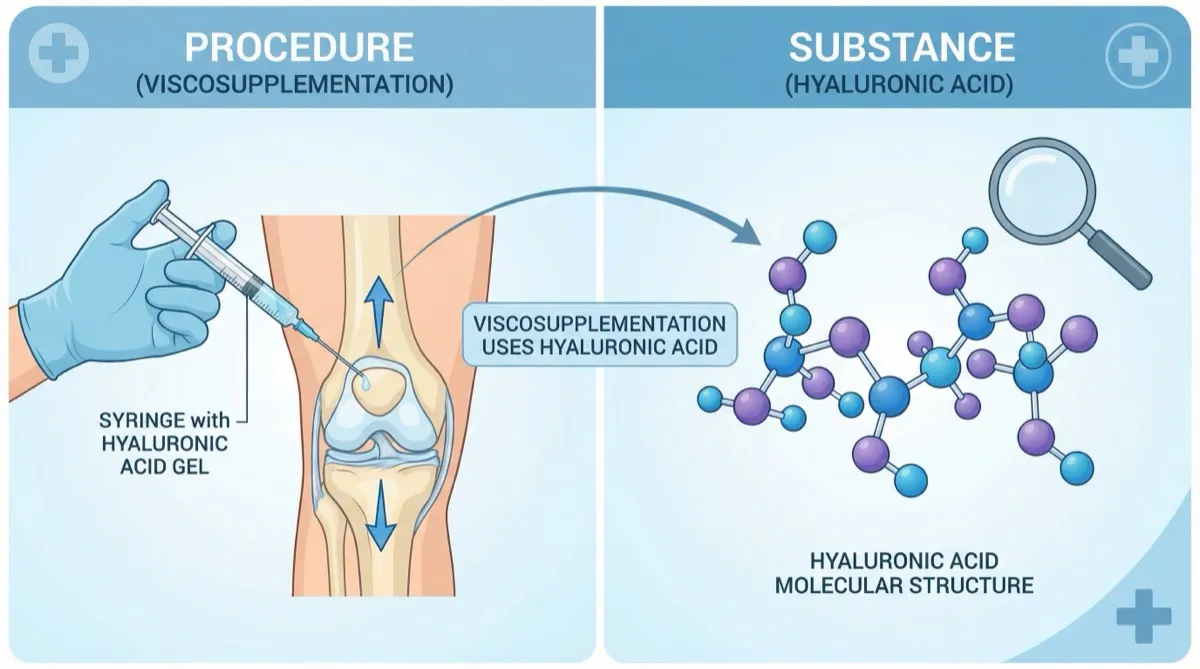
The key to understanding these terms is recognizing the difference between a procedure and the substance used in that procedure:
- Viscosupplementation is the procedure - the medical treatment that involves injecting a lubricating substance into your knee joint
- Hyaluronic acid is the substance - the gel-like material that gets injected during the procedure
Think of it like this: if you were getting a flu shot, “vaccination” would be the procedure, and the “vaccine” would be the substance being injected. Similarly, viscosupplementation is what your doctor does, and hyaluronic acid is what they use to do it.
What is Hyaluronic Acid?
Hyaluronic acid is a naturally occurring substance found throughout your body, particularly concentrated in your joints, skin, and eyes. In healthy knee joints, hyaluronic acid serves several critical functions:
- Lubrication - It allows the bones in your knee to glide smoothly against each other
- Shock absorption - It cushions your joint during movement and impact
- Cartilage protection - It helps nourish and protect the cartilage surfaces
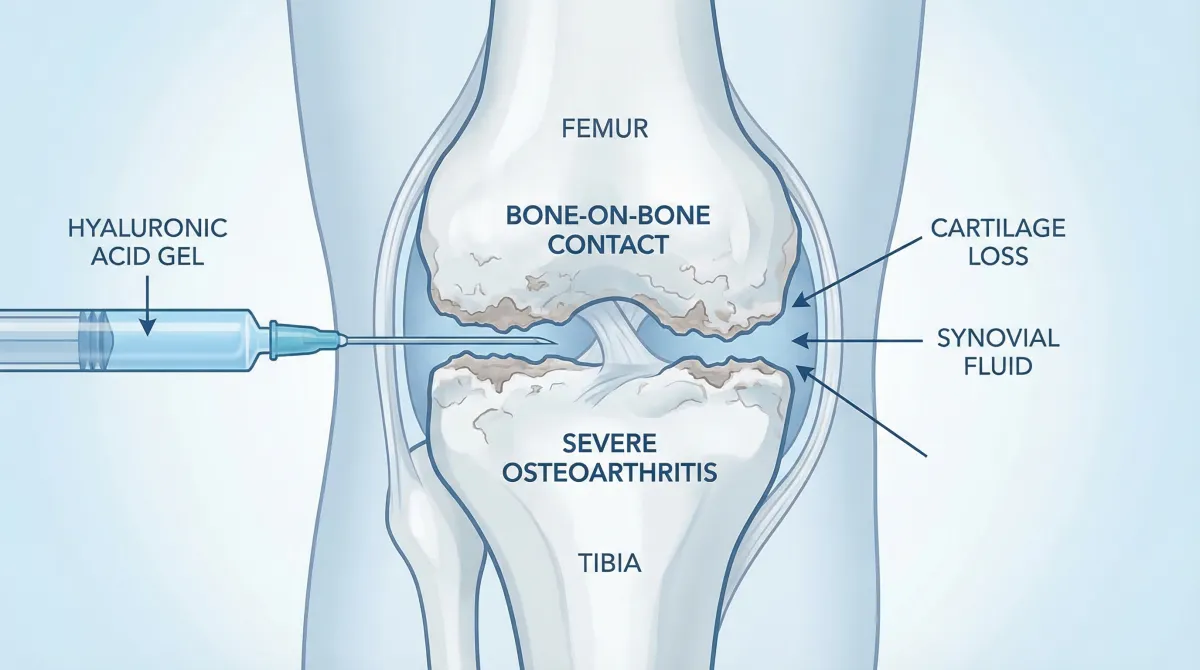
When you have osteoarthritis, the concentration and quality of hyaluronic acid in your knee joint decreases. This reduction leads to increased friction between bones, accelerated cartilage breakdown, and the pain and stiffness associated with arthritis.
What is Viscosupplementation?
Viscosupplementation literally means “supplementing viscosity” - in other words, adding thickness and lubrication back to your joint fluid. During this procedure, a healthcare provider injects hyaluronic acid directly into your knee joint to restore the cushioning and lubrication that has been lost due to osteoarthritis.
The procedure is relatively quick, typically taking 15-20 minutes in an outpatient setting. At the Joint Relief Institute, we use fluoroscopy (a type of real-time X-ray imaging) to ensure precise placement of the injection, maximizing effectiveness.
Why So Many Names for the Same Treatment?
One reason patients get confused is that this treatment goes by many different names:
- Viscosupplementation (the medical term for the procedure)
- Hyaluronic acid injections (describing the substance)
- Gel injections or gel shots (the common, patient-friendly term)
- HA injections (abbreviation for hyaluronic acid)
- Joint fluid therapy
- Knee lubricant injections
All of these terms refer to the same basic treatment: injecting hyaluronic acid into the knee joint to restore lubrication and reduce pain. Your doctor, insurance company, and pharmacy may each use different terminology, but they’re all talking about the same thing.
What About Different Brand Names?
Adding to the confusion, there are multiple FDA-approved hyaluronic acid products on the market, each with its own brand name. Some of the most common include:
- Synvisc and Synvisc-One - One of the most well-known brands, derived from rooster combs
- Euflexxa - Made from bacterial fermentation, suitable for patients with egg or poultry allergies
- Hyalgan - One of the original viscosupplementation products
- Supartz and Supartz FX - Highly purified sodium hyaluronate
- Gel-One - A single-injection option
- Orthovisc - High molecular weight hyaluronic acid
- Monovisc - Another single-injection formulation
While these products differ slightly in their molecular weight, source material, and dosing schedules, they all contain hyaluronic acid and work through the same mechanism. The Joint Relief Institute carries over ten different gel formulations, allowing our providers to select the most appropriate option for each patient’s specific needs, including accommodating allergies or sensitivities.
Frequently Asked Questions
Is viscosupplementation the same as hyaluronic acid?
Not exactly. Viscosupplementation is the procedure; hyaluronic acid is the substance used in the procedure. When someone says they’re getting “hyaluronic acid injections,” they’re receiving viscosupplementation treatment.
Are gel injections the same as viscosupplementation?
Yes. “Gel injections” is simply a more casual, patient-friendly term for viscosupplementation. The hyaluronic acid used in the procedure has a gel-like consistency, which is why many people call it a gel shot.
Does it matter which brand of hyaluronic acid I receive?
All FDA-approved hyaluronic acid products have been shown to be effective for knee osteoarthritis. However, some patients may respond better to certain formulations, and some products are better suited for patients with specific allergies. Your healthcare provider can help determine which product is right for you.
How is this different from cortisone shots?
Cortisone (corticosteroid) injections and viscosupplementation work through completely different mechanisms. Cortisone reduces inflammation and provides short-term pain relief but doesn’t restore joint lubrication. Viscosupplementation supplements the joint’s natural lubricant and can provide longer-lasting benefits. Many patients benefit from both treatments at different times.
How long does the relief from viscosupplementation last?
Results vary from person to person, but many patients experience relief for six months or longer. Some patients find that regular treatments every six months help them maintain their mobility and delay or avoid knee replacement surgery.
Is viscosupplementation covered by insurance?
Most insurance plans, including Medicare, cover viscosupplementation for knee osteoarthritis when other treatments haven’t provided adequate relief. Coverage details vary by plan, so it’s important to verify your specific benefits.
Is Viscosupplementation Right for You?
If you’re experiencing knee pain from osteoarthritis and haven’t found adequate relief from over-the-counter pain medications, physical therapy, or other conservative treatments, viscosupplementation may be worth considering. This non-surgical treatment can help restore joint function, reduce pain, and improve your quality of life.
The best way to determine if you’re a good candidate is to consult with a healthcare provider who specializes in treating knee osteoarthritis. They can evaluate your condition, review your medical history, and recommend the most appropriate treatment approach for your specific situation.
Take the Next Step Toward Relief
At the Joint Relief Institute, our experienced providers specialize in viscosupplementation and use advanced imaging techniques to ensure optimal results. We’ll give you an honest assessment of whether gel injections are right for your knee pain and help you understand all your treatment options.
Ready to learn more? Contact us today to schedule your consultation:
Phone: (800) 238-9307
Our Patient Care Specialists are available to answer your questions about viscosupplementation, insurance coverage, and what to expect from treatment. Don’t let terminology confusion keep you from exploring a treatment that could significantly improve your knee pain and mobility.