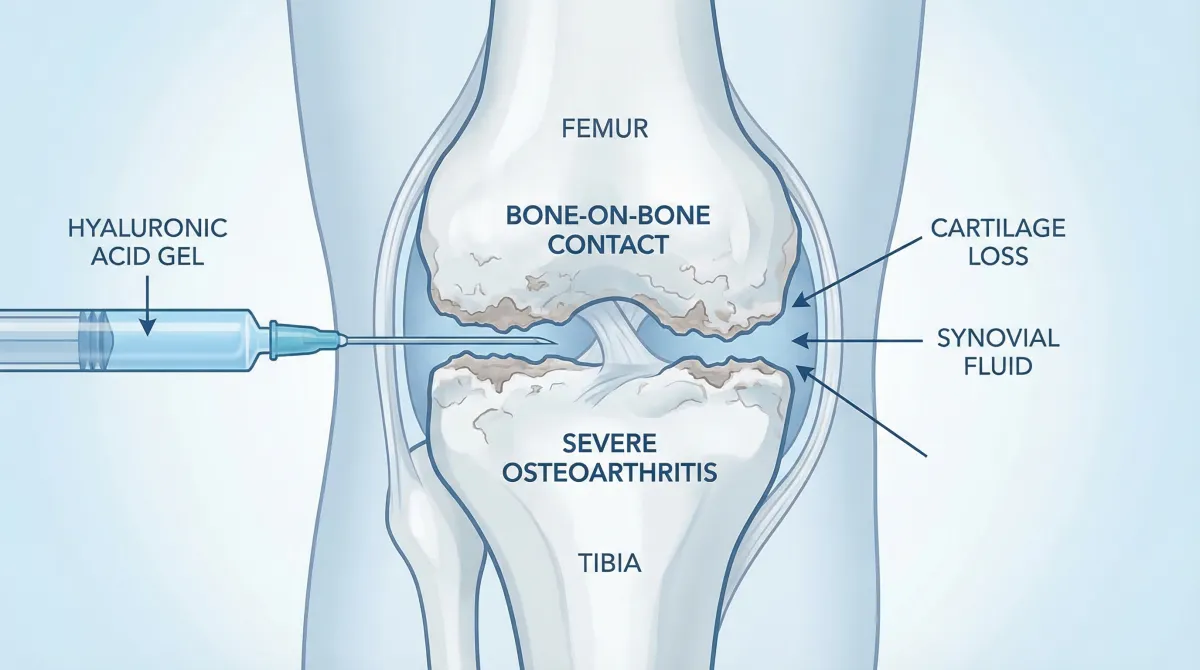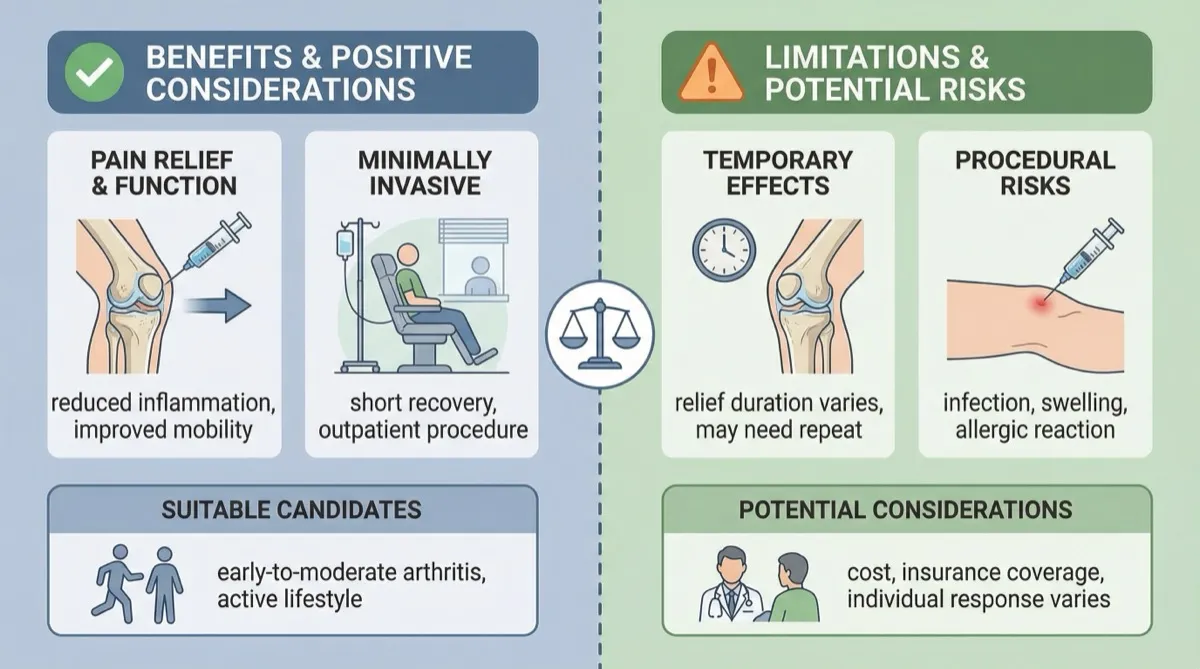
If you’re considering knee gel injections for osteoarthritis or have recently received treatment, understanding what to expect during recovery can help you prepare and know when to seek help. The good news is that recovery from viscosupplementation is remarkably quick compared to surgical alternatives, with most patients resuming normal activities within just a few days.
What is Viscosupplementation Recovery Like?
Viscosupplementation recovery is one of the most straightforward aspects of this treatment. Unlike knee replacement surgery, which requires months of recovery and intensive physical therapy, gel injections are an outpatient procedure with minimal downtime. Most patients leave the clinic 5-10 minutes after their injection and can return to light activities almost immediately.
Recovery from knee gel injections typically involves a brief rest period followed by a gradual return to normal activities. The entire recovery process is measured in days, not weeks or months, making it an attractive option for people who cannot afford extended time away from work or daily responsibilities.
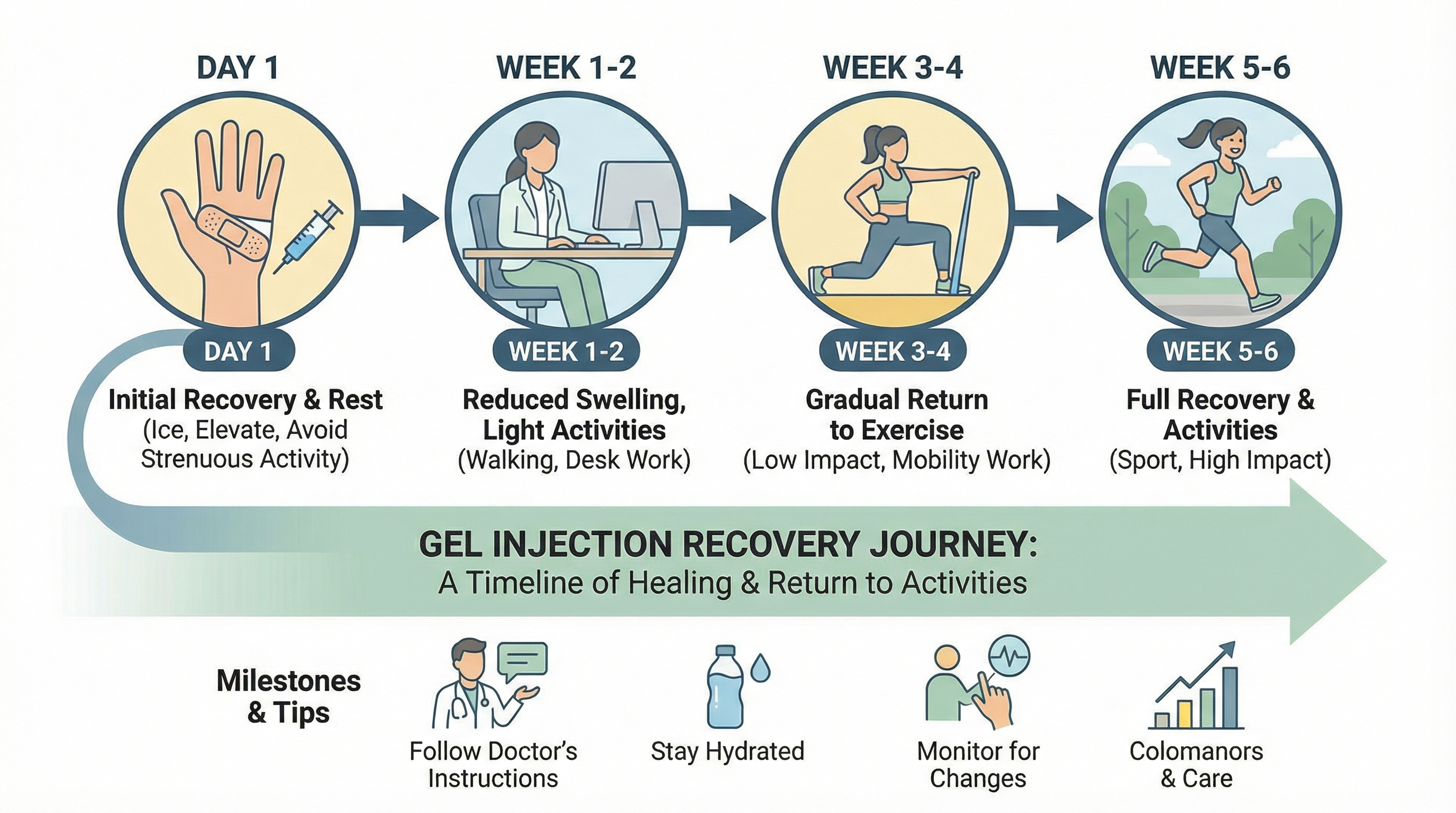
Day 1: Immediate Post-Injection Care
The first 24 hours after your gel injection are the most important for proper recovery. Here’s what to expect and how to care for your knee immediately after the procedure:
What’s Normal on Day 1
You may experience mild pain, swelling, or tenderness at the injection site. This is completely normal and indicates that your body is adjusting to the hyaluronic acid gel. Some patients also notice slight warmth or redness around the knee, which typically resolves within a few hours.
According to the Cleveland Clinic, mild pain and swelling at the injection site are the most common side effects, and they generally resolve on their own.
Immediate Aftercare Steps
Rest your knee: While you can walk and perform light activities, avoid putting too much weight on the treated knee for the first 48 hours. Light walking is fine, but avoid jogging, climbing stairs repeatedly, or standing for extended periods.
Apply ice: If you experience discomfort or swelling, apply an ice pack wrapped in a towel to your knee for 15-20 minutes several times throughout the day. This helps reduce inflammation and provides immediate pain relief.
Take it easy: This is not the day to run errands or catch up on household chores. Give your body time to adjust to the treatment.
Keep the injection site clean: Keep the area clean and dry. You can shower normally but avoid soaking the knee in a bath, hot tub, or swimming pool for at least 24 hours.
At The Joint Relief Institute, we use fluoroscopy imaging to ensure precise gel placement, which can contribute to smoother recovery by avoiding surrounding tissues and ensuring the hyaluronic acid goes exactly where it needs to be.
Days 2-7: First Week Recovery
The first week after your gel injection is when most of the minor side effects resolve and you begin transitioning back to normal activities.
What to Expect
By day 2 or 3, most patients notice that injection site tenderness has significantly decreased. Any swelling should start subsiding, and you’ll likely feel more comfortable moving your knee. However, you probably won’t notice pain relief yet—that comes later.
The American Academy of Orthopaedic Surgeons recommends avoiding excessive activity such as jogging or heavy lifting for the first 48 hours after injection.
Activity Guidelines for Week 1
Days 2-3: You can resume most daily activities, including light housework, desk work, and gentle walking. Continue to avoid high-impact activities.
Days 4-7: Gradually increase your activity level based on how your knee feels. If you have a physically demanding job, you may need to request light duty for a few days or work from home if possible.
What to avoid: During the first week, steer clear of these activities:
- Running or jogging
- Heavy lifting (over 20 pounds)
- Deep squatting or kneeling
- High-impact sports
- Prolonged standing or walking
Managing Mild Discomfort
If you experience lingering soreness during the first week, over-the-counter pain relievers like acetaminophen can help. Avoid NSAIDs (ibuprofen, aspirin) unless specifically recommended by your doctor, as there’s some debate about whether they might interfere with the gel’s effectiveness. Always consult your healthcare provider before taking any medication.
Continue using ice as needed for comfort, especially after activity.
Weeks 2-4: Waiting for Relief to Begin
For many patients, weeks 2 through 4 can feel anticlimactic. You’ve recovered from the injection itself, but you may not yet feel significant pain relief from your osteoarthritis. This is completely normal and expected.
When Does Pain Relief Start?
According to research compiled by Hospital for Special Surgery, hyaluronic acid knee injections typically begin providing pain relief 2 to 6 weeks after treatment, with many patients experiencing the most noticeable benefits around weeks 4 to 6.
Some fortunate patients notice improvement as early as 3 days post-injection, while others may need to wait 8-12 weeks to experience the full benefits. This variability depends on several factors:
- The severity of your osteoarthritis
- Your activity level
- Your body’s individual response to hyaluronic acid
- Whether you’re receiving a single injection or a series
If You’re Getting a Series of Injections
Most gel injection treatments involve a series of 3-5 weekly injections rather than a single shot. If this is your treatment protocol, you’ll repeat the recovery process each week, though subsequent injections often involve less discomfort since your knee is already familiar with the procedure.
You may not feel significant relief until you’ve completed the entire series. This doesn’t mean the treatment isn’t working—hyaluronic acid needs time to integrate into your joint and begin providing lubrication and cushioning.
Returning to Exercise
By week 2-3, most patients can return to low-impact exercise like swimming, cycling, or walking. In fact, gentle movement is encouraged as it helps distribute the hyaluronic acid throughout your joint and maintains muscle strength around your knee.
The Joint Relief Institute providers emphasize a holistic approach to knee health. While viscosupplementation is highly effective, our physicians also make recommendations based on diet, exercise, and may show you helpful stretches to support your recovery and long-term joint health.
Month 1 and Beyond: Long-Term Results
By the end of the first month, you should have a good sense of how well the gel injections are working for you. Most patients who respond positively to viscosupplementation experience noticeable pain reduction and improved mobility.
Expected Results Timeline
Weeks 4-6: This is when most patients begin experiencing meaningful pain relief. You may notice it’s easier to climb stairs, walk longer distances, or participate in activities you’d been avoiding due to knee pain.
Weeks 8-12: Pain relief continues to improve as the hyaluronic acid fully integrates into your joint. Many patients report this as the period of maximum benefit.
Months 3-6: The pain-relieving effects of gel injections typically last approximately 6 months, though some patients experience benefits for shorter or longer periods. Individual results vary based on activity level, severity of osteoarthritis, and body chemistry.
Maximizing Your Results
To get the most out of your gel injections:
Stay active: Regular low-impact exercise helps maintain the benefits of viscosupplementation by keeping your joint mobile and muscles strong.
Maintain a healthy weight: Every pound of excess body weight puts approximately 4 pounds of pressure on your knees. Weight management can significantly extend the benefits of your treatment.
Follow your doctor’s recommendations: Your Joint Relief Institute provider will give you personalized advice on diet, exercise, and stretches that support your knee health.
Consider repeat treatments: If gel injections provide significant relief, you may benefit from repeat treatments approximately every 6 months to maintain pain control.
Normal vs. Concerning Symptoms: When to Call Your Doctor
While gel injections are generally safe with minimal side effects, it’s important to recognize the difference between normal recovery symptoms and signs of complications.
Normal Recovery Symptoms
These symptoms are expected and should resolve on their own:
- Mild to moderate pain at the injection site (lasting 1-3 days)
- Slight swelling or puffiness around the knee (lasting 2-5 days)
- Temporary stiffness when moving the knee (lasting 1-2 days)
- Warmth at the injection site without spreading redness (lasting 1-2 days)
- Mild bruising at the injection site
Concerning Symptoms That Require Medical Attention
Contact your healthcare provider immediately if you experience:
Severe or worsening pain: While mild discomfort is normal, severe pain that worsens over time rather than improving could indicate an injection flare or other complication.
Significant swelling: If your knee becomes significantly swollen, especially if it persists beyond 48 hours or continues to worsen, this may require evaluation. About 1% of patients experience an injection flare causing fluid accumulation that may need to be drained.
Signs of infection: These include severe pain, spreading redness, warmth extending beyond the injection site, fever above 100.4°F (38°C), or drainage from the injection site. While rare, infections require immediate medical attention.
Numbness or tingling: Any loss of sensation or persistent tingling in your knee or lower leg should be evaluated promptly.
Allergic reaction symptoms: Difficulty breathing, facial swelling, widespread rash or hives, or rapid heartbeat may indicate an allergic reaction requiring emergency care.
The Joint Relief Institute offers over ten different hyaluronic acid gels, meaning that if you have allergies to specific formulations, we can select an alternative that’s safe for you.
Gel Injections vs. Surgery: A Recovery Comparison
One of the most significant advantages of viscosupplementation is the dramatically shorter recovery time compared to surgical alternatives.
Recovery Timeline Comparison
Gel Injections:
- Procedure time: 10-15 minutes
- Time off work: 0-2 days (often none required)
- Return to light activities: 1-2 days
- Return to normal activities: 1 week
- Full recovery: 1-2 weeks
- When relief begins: 2-6 weeks
Knee Replacement Surgery:
- Procedure time: 1-2 hours
- Hospital stay: 1-2 nights
- Time off work: 6-12 weeks
- Return to light activities: 6-8 weeks
- Return to normal activities: 3-6 months
- Full recovery: Up to 1 year
- Physical therapy: Required for months
According to a comparison by Joint Relief Institute, viscosupplementation is an outpatient procedure where patients can leave just 5-10 minutes after treatment, with most requiring only one day of rest. In contrast, knee replacement surgery requires months of recovery and intensive physical therapy.
Why Consider Gel Injections First
Gel injections offer significant advantages for many patients:
No anesthesia required: You avoid the risks associated with general or regional anesthesia.
No surgical risks: There are no incisions, no risk of surgical complications, and no scarring.
Minimal disruption to your life: Most people can return to work the next day and resume normal activities within a week.
May delay or prevent surgery: For many patients, viscosupplementation provides sufficient relief to postpone or completely avoid knee replacement surgery.
Repeatable treatment: If gel injections work well for you, you can receive repeat treatments every 6 months to maintain pain control.
Think of it like this: would you rather change your oil every six months (knee gel injections) or wait until the engine doesn’t run anymore and get a new one (knee replacement surgery)?
Frequently Asked Questions About Gel Injection Recovery
How long after gel injections can I drive?
Most patients can drive the same day as their injection if they didn’t receive sedation. However, if your treated knee is your right knee and you experience any discomfort that might affect your ability to brake safely, wait until the following day.
Can I work the day after my gel injection?
Most patients with desk jobs can return to work the next day or even the same day if needed. If your job involves heavy lifting, prolonged standing, or strenuous physical activity, you may want to take 1-2 days off or request light duty.
When can I exercise after knee gel injections?
Light walking is fine immediately, but avoid strenuous exercise for the first 48 hours. After that, you can gradually resume low-impact activities like swimming or cycling. High-impact activities like running or jumping should wait until your doctor gives you clearance, typically after 1-2 weeks.
Is it normal to not feel relief right away?
Yes, absolutely. Most patients don’t experience significant pain relief for 2-6 weeks after their injection. The hyaluronic acid needs time to integrate into your joint and begin providing cushioning and lubrication. Be patient and give the treatment time to work.
What if I don’t get relief from gel injections?
The effectiveness of viscosupplementation varies from person to person. Some patients experience dramatic improvement, while others notice minimal benefit. If you don’t achieve adequate relief after completing your injection series and waiting 8-12 weeks, discuss alternative treatment options with your doctor. The Joint Relief Institute providers will work with you to find the right solution for your individual needs.
Can I get gel injections more than once?
Yes, if gel injections provide effective pain relief, they can be repeated. Most patients who benefit from viscosupplementation receive repeat treatments approximately every 6 months to maintain pain control. There’s no limit to how many times you can receive this treatment if it continues to be effective for you.
Will insurance cover gel injections?
Many insurance plans, including Medicare, cover viscosupplementation for knee osteoarthritis when conservative treatments haven’t provided adequate relief. Coverage varies by plan, so contact your insurance provider or our office to verify your specific benefits. You can learn more in our article about insurance coverage for knee gel injections.
Take the Next Step Toward Knee Pain Relief
Recovery from knee gel injections is straightforward, quick, and involves minimal disruption to your daily life. With proper aftercare and realistic expectations about when relief will begin, you can maximize the benefits of this treatment and potentially delay or avoid knee surgery.
If you’re considering viscosupplementation or want to learn more about whether gel injections are right for your knee osteoarthritis, the Joint Relief Institute is here to help. Our experienced providers use fluoroscopy guidance to ensure precise gel placement, offer over ten different hyaluronic acid formulations to meet your individual needs, and take a holistic approach to knee health that goes beyond just injections.
Ready to explore your options? Contact us today:
Call: (800) 238-9307
Online: Schedule a consultation to discuss whether gel injections are right for you.
Our team will provide a non-biased assessment, answer all your questions about the procedure and recovery, and help you make an informed decision about your knee health. Don’t let knee pain hold you back from the activities you love—discover if viscosupplementation can help you get back to living life on your terms.