How Do Knee Gel Injections Work? The Science Explained
If you’re one of the 32.5 million American adults living with osteoarthritis [1], you’ve probably heard about knee gel injections as a treatment option. But how exactly do these injections work? And why do some providers use fluoroscopy while others don’t?
This guide explains the science behind viscosupplementation in straightforward terms, helping you understand what happens inside your knee joint and why this treatment may offer relief.
What Are Knee Gel Injections?
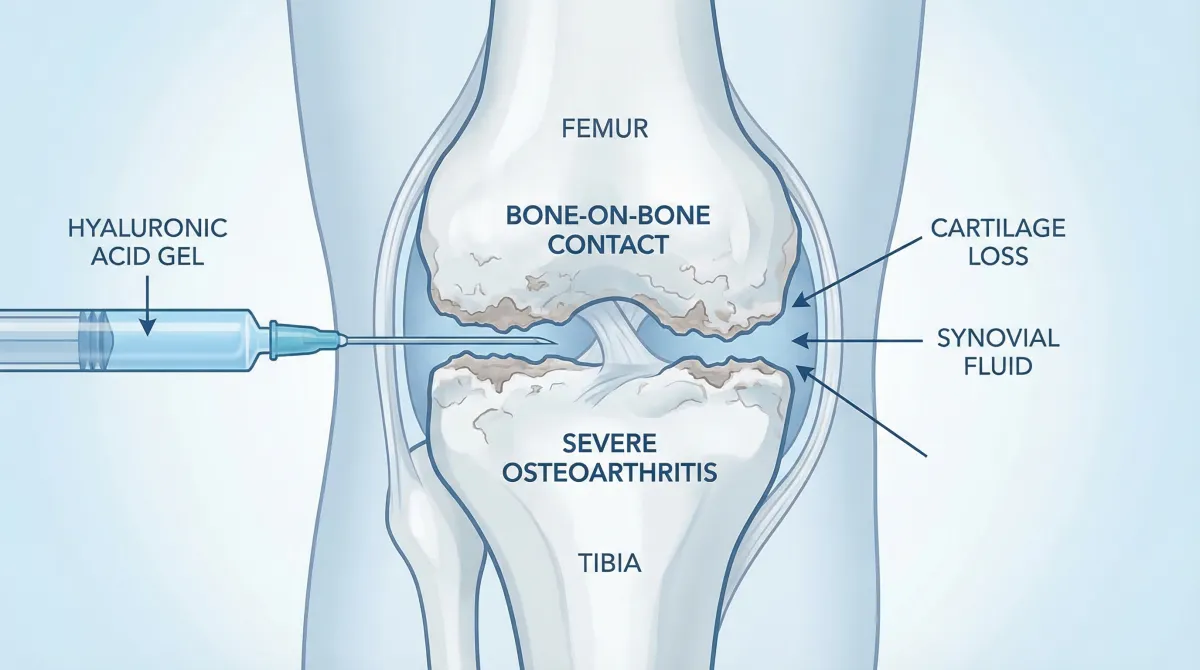
Knee gel injections, clinically known as viscosupplementation, involve injecting hyaluronic acid (HA) directly into the knee joint. Hyaluronic acid is a naturally occurring substance found throughout your body that acts as a lubricant and shock absorber in healthy joints [2].
Think of it like changing the oil in your car. You wouldn’t wait until your engine completely fails before performing maintenance. Similarly, knee gel injections help restore the natural cushioning in your joint before arthritis causes irreversible damage. Regular maintenance every six months can keep your knees functioning smoothly, potentially delaying or avoiding the need for a total knee replacement.
The Science: Understanding Hyaluronic Acid
To understand how gel injections work, you first need to know what happens in a healthy knee versus an arthritic one.
What Is Hyaluronic Acid?
Hyaluronic acid is a natural sugar molecule present in synovial fluid—the slippery liquid that fills your joint spaces. In healthy knees, HA concentrations range from 1-4 mg/ml, giving synovial fluid its characteristic egg white-like consistency [3].
This viscous fluid performs several critical functions:
- Lubrication: Reduces friction between cartilage surfaces during movement
- Shock absorption: Cushions impact forces during walking, running, and jumping
- Protective film formation: Creates a gel-like layer that shields cartilage from wear
- Hydration: Binds to water molecules to maintain tissue health [4]
What Happens in Osteoarthritis
When osteoarthritis develops, several destructive changes occur inside your knee:
- The body produces less hyaluronic acid
- The HA that remains has lower molecular weight and quality
- Synovial fluid becomes thinner and less protective
- Cartilage loses its cushioning and begins to deteriorate
- Inflammation increases, causing pain and stiffness
Knee osteoarthritis affects at least 19% of American adults aged 45 and older, with approximately 14 million people experiencing symptomatic knee OA [5]. The prevalence has actually doubled since the mid-20th century, making this a growing public health concern.
How Knee Gel Injections Restore Joint Function
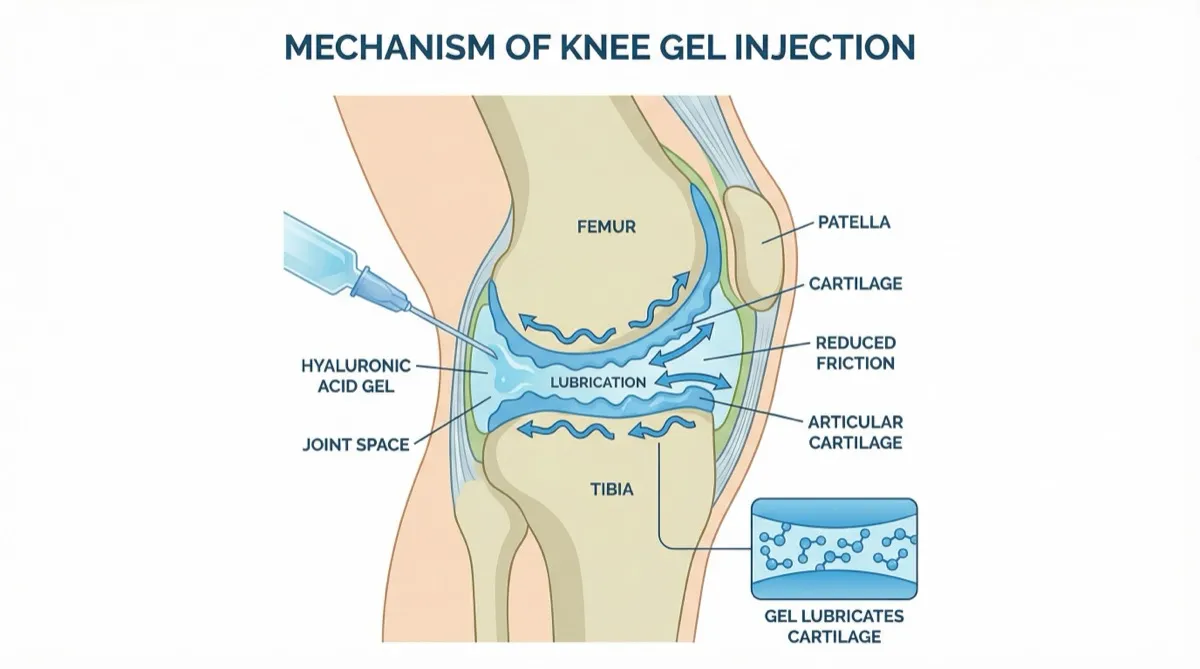
When your doctor injects hyaluronic acid into your knee, the treatment works through multiple mechanisms simultaneously. A 2025 systematic review identified several ways these injections provide relief [6]:
1. Mechanical Lubrication and Cushioning
The injected HA immediately increases the concentration and quality of joint fluid, restoring the natural “slipperiness” that arthritis has taken away. This enhanced lubrication reduces friction between cartilage surfaces, making movement smoother and less painful.
As load is placed on your joint, the hyaluronic acid presses against cartilage surfaces and forms a protective gel layer of micrometric thickness that shields the cartilage from frictional damage [7].
2. Pain Relief (Antinociceptive Effects)
Hyaluronic acid doesn’t just mask pain—it addresses the underlying mechanisms that cause it. The injections help reduce pain signals from nerve endings in the joint by:
- Decreasing inflammation around nerve fibers
- Stabilizing nerve membranes
- Reducing the production of pain-causing inflammatory molecules
According to research from Hospital for Special Surgery, gel injections resulted in successful outcomes for 60% of knee osteoarthritis patients [8].
3. Chondroprotection (Cartilage Protection)
Perhaps most importantly, hyaluronic acid helps protect your remaining cartilage from further breakdown. Studies show that HA stimulates cartilage cells (chondrocytes) to produce more proteoglycans and glycosaminoglycans—the building blocks of healthy cartilage [9].
This chondroprotective effect was the most frequently reported mechanism in clinical research, suggesting that gel injections don’t just treat symptoms but may help slow disease progression.
4. Anti-Inflammatory Effects
High molecular weight hyaluronic acid has been shown to reduce inflammation by down-regulating inflammatory cytokines and enzymes associated with osteoarthritis [10]. This helps break the cycle of inflammation that drives arthritis progression.
The Treatment Process: What to Expect
Understanding the procedure itself helps demystify the treatment and reduce anxiety.
Standard Injection Protocol
Most knee gel injection treatments follow this general approach:
- Preparation: Your doctor cleans the injection site and may apply a local anesthetic
- Needle placement: Using either anatomical landmarks (palpation) or imaging guidance, the provider positions a needle into the joint space
- Injection: The hyaluronic acid gel is slowly injected into the knee joint
- Duration: The entire procedure typically takes just a few minutes
Most patients describe the experience as uncomfortable rather than severely painful [11].
Treatment Schedule
Depending on the specific product used, you may receive:
- Traditional multi-dose regimens: 3-5 weekly injections
- Modern single-dose options: One injection per treatment cycle
The effects typically last approximately six months before diminishing [12]. Once benefits fade, patients can receive repeat treatments safely. Research shows that intra-articular hyaluronic acid injections delay total knee replacement by 299 to 370 days, with approximately 84% of patients not undergoing surgery within two years [13].
Timeline for Results
Don’t expect immediate relief. The full benefits generally develop over 4 to 6 weeks as the hyaluronic acid integrates into your joint fluid and begins its mechanical and biological effects [14].
Why Fluoroscopy Matters: The Precision Advantage
Here’s a critical fact that many patients don’t know: not all knee injections hit their target.
The Problem with “Blind” Injections
Research has revealed a troubling truth about traditional knee injections performed without imaging guidance—they miss the joint space up to 30% of the time [15]. When medication is deposited outside the joint, you receive no therapeutic benefit.
Think about it: you’re investing time and money in a treatment, but there’s a one-in-three chance the medicine isn’t even reaching the right location.
How Fluoroscopy Ensures Accuracy
At Joint Relief Institute, we use fluoroscopy-guided injections for every patient. Fluoroscopy is a type of real-time X-ray that allows your provider to visualize your knee anatomy continuously during the procedure [16].
This advanced technique provides several critical advantages:
Real-time visualization: Your doctor can see the needle’s exact position throughout the injection, ensuring precise placement within the joint space.
Confirmed delivery: We can verify that the medication is flowing into the correct location before completing the injection.
Improved outcomes: Studies show that patients receiving fluoroscopy-guided injections experience significantly better pain relief and improved joint function compared to those receiving traditional “blind” injections [17].
Enhanced safety: Real-time imaging minimizes the risk of accidental injury to nerves, blood vessels, or other structures around the knee.
Reduced complications: Precise needle placement reduces the chance of side effects and adverse reactions.
Fluoroscopy is widely used to guide joint injections because it is readily available, cost-effective, quick, and easy to use [18]. More importantly, it ensures you receive the full therapeutic benefit of your treatment.
Who Benefits Most from Knee Gel Injections?
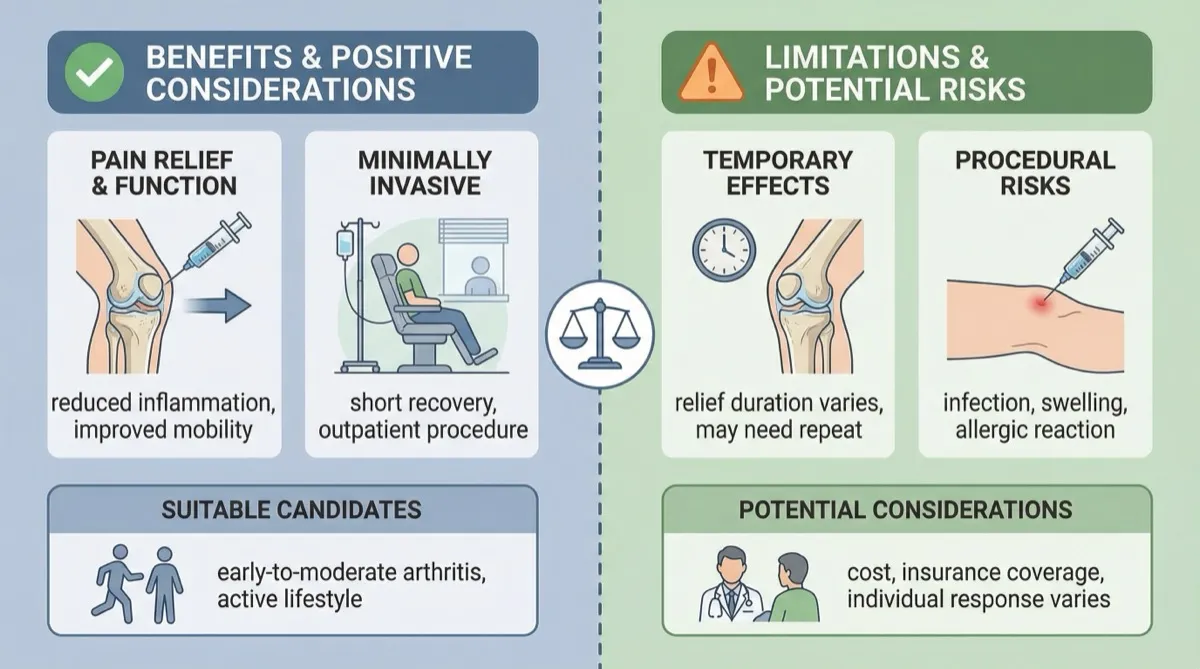
Viscosupplementation works most effectively for specific patient populations.
Ideal Candidates
You may be a good candidate for knee gel injections if you:
- Have mild-to-moderate osteoarthritis (not severe bone-on-bone arthritis)
- Haven’t found adequate relief from conservative treatments like physical therapy, weight loss, or NSAIDs
- Want to delay or avoid knee replacement surgery
- Are looking for a non-opioid pain management option
- Are between ages 45-75 (though individual factors matter more than age alone)
Research suggests that younger, non-obese patients with mild arthritis tend to experience the best results [19].
Who Should Consider Other Options
Knee gel injections may be less effective if you have:
- Severe, advanced arthritis with significant bone-on-bone contact
- Complete loss of joint space visible on X-rays
- Significant knee deformity
- Active infection in the knee
In these cases, your doctor may recommend alternative treatments or surgical options.
The Preventive Maintenance Approach
Remember the oil change analogy? This preventive mindset is crucial to understanding the full value of viscosupplementation.
Reactive Approach: Wait until your knee completely deteriorates, live with severe pain and disability, then undergo major knee replacement surgery with months of recovery.
Proactive Approach: Maintain your joint health with regular gel injections every six months, preserve your natural knee longer, stay active and functional, and potentially avoid or significantly delay surgery.
Which approach makes more sense for your quality of life?
Just as you wouldn’t drive your car 100,000 miles without changing the oil, you shouldn’t wait until your knee is completely destroyed before seeking treatment. Proactive maintenance through viscosupplementation can help preserve your mobility and independence for years to come.
Understanding Treatment Expectations
It’s important to have realistic expectations about what knee gel injections can and cannot do.
What Gel Injections Can Do
- Reduce pain and stiffness in many patients
- Improve joint function and mobility
- Provide relief lasting approximately six months
- Delay the need for knee replacement surgery
- Offer a minimally invasive treatment option
- Help you stay active and maintain quality of life
What They Cannot Do
- Reverse severe, advanced arthritis
- Regenerate completely destroyed cartilage
- Provide permanent cure for osteoarthritis
- Work equally well for every patient
- Eliminate the eventual need for surgery in all cases
Clinical research shows mixed results, with some studies finding modest benefits while others report more substantial improvements [20]. Individual responses vary based on arthritis severity, overall health, and other factors.
Safety and Side Effects
Knee gel injections are generally considered safe, with most side effects being mild and temporary.
Common Side Effects
- Temporary joint discomfort following injection
- Mild swelling or inflammation at the injection site
- Warmth or slight redness around the knee
These effects typically resolve within a few days.
Less Common Reactions
- Bleeding or bruising at the injection site
- Temporary numbness
- Minor skin irritation
Rare but Serious: Injection Flare
In rare cases, patients experience “injection flare”—severe pain and inflammation within hours of the injection. This requires immediate medical attention but is uncommon [21].
Long-Term Safety
Research on repeated courses of hyaluronic acid injections has found the treatment to be safe over time, with many patients receiving multiple treatment cycles over several years [22].
Take the Next Step Toward Pain Relief
Now that you understand how knee gel injections work and why precision matters, you can make an informed decision about your treatment options.
At Joint Relief Institute, we combine cutting-edge fluoroscopy guidance with high-quality hyaluronic acid products to maximize your chances of successful outcomes. Our approach ensures that every injection is precisely placed for optimal therapeutic benefit.
Don’t let knee pain continue to limit your life. Whether you’re struggling to climb stairs, play with your grandchildren, or simply walk without discomfort, viscosupplementation may offer the relief you’ve been seeking.
Ready to explore whether knee gel injections are right for you?
Call Joint Relief Institute today at (800) 238-9307 to schedule a consultation with our experienced specialists. We’ll evaluate your specific situation, explain your treatment options, and develop a personalized plan to help you reclaim your mobility and quality of life.
Remember: proactive maintenance beats reactive repair. Just like changing your oil every six months keeps your car running smoothly, regular viscosupplementation can help keep your knees functioning at their best.
Frequently Asked Questions
How long do knee gel injections last?
The effects typically last approximately six months before diminishing, though individual results vary. Once benefits fade, you can safely receive repeat treatments to maintain pain relief and joint function.
Are knee gel injections painful?
Most patients describe the injection as uncomfortable rather than severely painful. Your doctor will clean the area and may apply a local anesthetic beforehand. The procedure itself takes just a few minutes.
How soon will I feel relief after knee gel injections?
Don’t expect immediate results. The full benefits generally develop over 4 to 6 weeks as the hyaluronic acid integrates into your joint fluid and begins its mechanical and biological effects.
Can knee gel injections help avoid knee replacement?
Research shows that hyaluronic acid injections delay total knee replacement by 299 to 370 days on average, with approximately 84% of patients not undergoing surgery within two years. While they can’t prevent surgery indefinitely for everyone, they offer significant delay for many patients.
What makes fluoroscopy-guided injections better than standard injections?
Studies show that non-guided injections miss the joint space up to 30% of the time. Fluoroscopy provides real-time X-ray visualization, ensuring the medication reaches the correct location and significantly improving outcomes compared to “blind” injections.
Sources
-
Osteoarthritis Action Alliance. “OA Prevalence and Burden.” University of North Carolina. https://oaaction.unc.edu/oa-module/oa-prevalence-and-burden/
-
Arthritis Foundation. “Hyaluronic Acid Injections for Knee Pain: How It Could Help.” https://www.arthritis.org/health-wellness/treatment/treatment-plan/disease-management/hyaluronic-acid-injections-for-knee-pain
-
Necas J, et al. “Hyaluronan and synovial joint: function, distribution and healing.” PMC. 2014. https://pmc.ncbi.nlm.nih.gov/articles/PMC3967437/
-
Physiopedia. “Synovium & Synovial Fluid.” https://www.physio-pedia.com/Synovium_&_Synovial_Fluid
-
Deshpande BR, et al. “The number of persons with symptomatic knee osteoarthritis in the United States: Impact of race/ethnicity, age, sex, and obesity.” PMC. https://pmc.ncbi.nlm.nih.gov/articles/PMC5319385/
-
PubMed. “Mechanisms of Action of Intra-articular Hyaluronic Acid Injections for Knee Osteoarthritis: A Targeted Review of the Literature.” 2025. https://pubmed.ncbi.nlm.nih.gov/40108507/
-
Arthritis-Health. “What Is Hyaluronic Acid?” https://www.arthritis-health.com/treatment/injections/what-hyaluronic-acid
-
Hospital for Special Surgery. “What to Know About Knee Gel Injections (Viscosupplementation).” https://www.hss.edu/health-library/conditions-and-treatments/knee-gel-injections-viscosupplementation
-
Raman R, et al. “Role and Effectiveness of Intra-articular Injection of Hyaluronic Acid in the Treatment of Knee Osteoarthritis: A Systematic Review.” PMC. 2022. https://pmc.ncbi.nlm.nih.gov/articles/PMC9135165/
-
Rutjes AWS, et al. “Viscosupplementation for knee osteoarthritis: systematic review and meta-analysis.” PMC. 2022. https://pmc.ncbi.nlm.nih.gov/articles/PMC9258606/
-
Cleveland Clinic. “Knee Gel Injections (Viscosupplementation): Uses & Side Effects.” https://my.clevelandclinic.org/health/procedures/knee-gel-injections-viscosupplementation
-
American Academy of Family Physicians. “Intra-Articular Hyaluronic Acid Injections for Knee Osteoarthritis.” AAFP. 2025. https://www.aafp.org/pubs/afp/issues/2025/1100/fpin-ci-intra-articular-hyaluronic-acid-injections-knee-osteoarthritis.html
-
Ong KL, et al. “Hyaluronic Acid Injections Delay Total Knee Replacement Surgery.” PMC. https://pmc.ncbi.nlm.nih.gov/articles/PMC8567800/
-
Mayo Clinic. “Hyaluronic acid (injection route) - Side effects & uses.” https://www.mayoclinic.org/drugs-supplements/hyaluronic-acid-injection-route/description/drg-20074557
-
AuntMinnie. “Fluoroscopy confirms accuracy of knee injections.” https://www.auntminnie.com/clinical-news/digital-x-ray/article/15632691/fluoroscopy-confirms-accuracy-of-knee-injections
-
Desert Spine and Sports Physicians. “Joint Injections Under Fluoroscopy.” https://www.desertspineandsports.com/fluoroscopically-guided-joint-injections/
-
Arthritis Knee Pain Centers. “What Is a Fluoroscopy Injection?” https://arthritiskneepain.com/wellness-blog/what-is-a-fluoroscopy-injection/
-
Sofka CM. “Fluoroscopic-guided procedures of the lower extremity.” PMC. 2022. https://pmc.ncbi.nlm.nih.gov/articles/PMC9362560/
-
Arthritis Foundation. “Hyaluronic Acid Injections for Knee Pain: How It Could Help.” https://www.arthritis.org/health-wellness/treatment/treatment-plan/disease-management/hyaluronic-acid-injections-for-knee-pain
-
Altman RD, et al. “Viscosupplementation for Osteoarthritis of the Knee: A Systematic Review and Meta-analysis.” Annals of Internal Medicine. 2012. https://www.acpjournals.org/doi/10.7326/0003-4819-157-3-201208070-00473
-
Hospital for Special Surgery. “What to Know About Knee Gel Injections (Viscosupplementation).” https://www.hss.edu/health-library/conditions-and-treatments/knee-gel-injections-viscosupplementation
-
Cooper C, et al. “Efficacy and safety of repeated courses of hyaluronic acid injections for knee osteoarthritis: A systematic review.” PubMed. 2017. https://pubmed.ncbi.nlm.nih.gov/29496227/